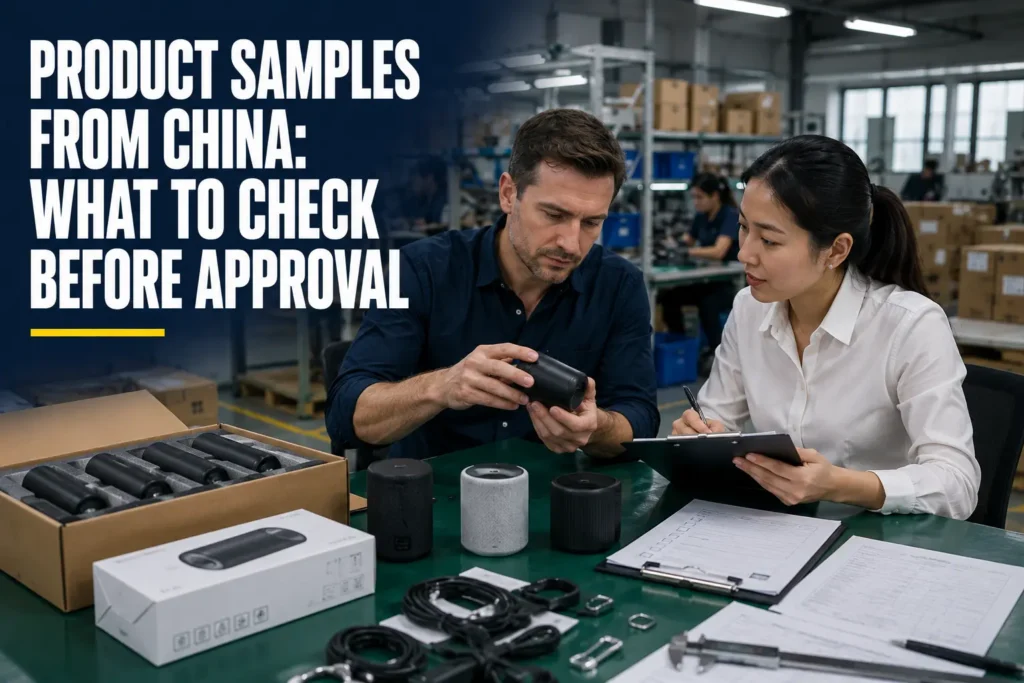
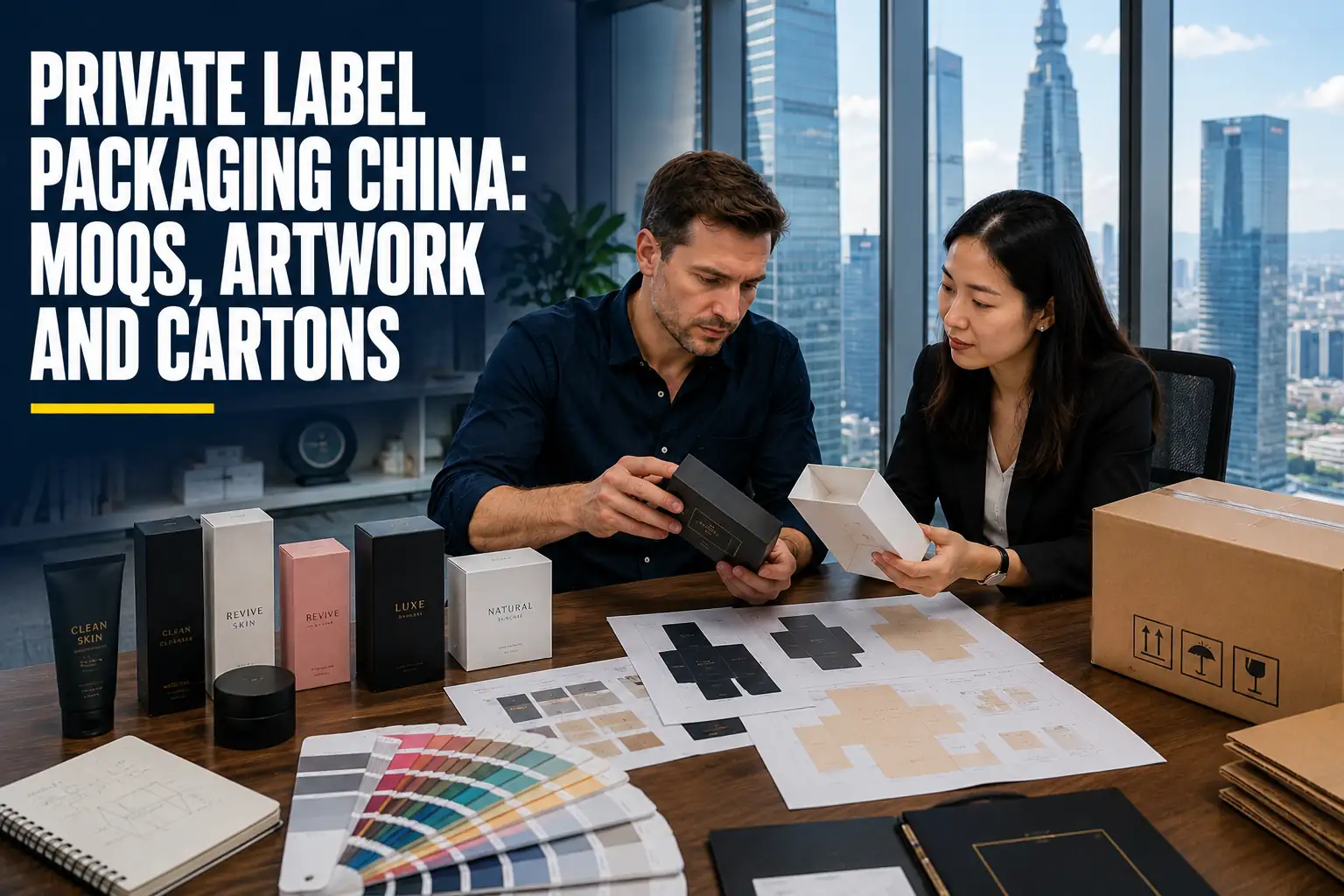
Private label packaging China suppliers produce can turn a standard product into a brand-ready item, but packaging creates its own MOQs, artwork risks, quality checks and freight costs. A supplier saying “custom packaging is no problem” does not mean every detail has been priced, tested or approved.
Plan packaging alongside the product. Leaving boxes, labels and cartons until production is nearly finished often creates rushed artwork, unexpected setup charges and poor protection in transit.
Private label packaging China suppliers can produce reliably
Start by separating the different layers of packaging. Each layer has a different job and may be made by a different supplier.
- Product packaging: polybags, wraps, sleeves or direct protection around the item.
- Retail packaging: the printed box, pouch, tube or card seen by the customer.
- Inserts: manuals, warranty cards, dividers, foam, moulded trays and accessories.
- Labels: barcodes, SKU labels, warnings and fulfilment labels.
- Export packaging: outer cartons, pallet wrapping, corner protection and shipment marks.
A good retail box is not a substitute for a strong export carton. Likewise, a robust outer carton does not fix a product that moves around inside weak retail packaging.
Packaging MOQs can be higher than the product MOQ
Custom printing usually has its own setup requirements. A product factory may agree to make 500 units while the packaging supplier requires a larger run of boxes, labels or inserts.
Ask for the MOQ of every custom component:
- Printed retail box.
- Custom colour box or pouch.
- Printed manual or insert.
- Barcode or warning label.
- Moulded foam or plastic tray.
- Custom shipping carton.
Also ask whether the MOQ applies per design, colour, size or SKU. A 2,000-piece packaging MOQ may mean 2,000 of each artwork version rather than 2,000 mixed across the whole range.
If the packaging run exceeds the first product order, confirm who owns the unused stock, where it will be stored and what happens if the artwork changes. Surplus packaging has little value if it contains an old barcode, address or product claim.
Get the dieline before final artwork
The dieline is the packaging template showing cut lines, folds, bleed areas and panel positions. Do not ask a designer to prepare final artwork from a rough box measurement or product photograph.
Before artwork is released, confirm:
- Final packaging dimensions.
- Dieline version and file format.
- Bleed and safe areas.
- Print method and colour process.
- Material and surface finish.
- Barcode position and required size.
- Required marks, warnings and country information.
The supplier should return a production proof using the final dieline. Check every panel, including small flaps and bottom panels that are easy to miss.
Control artwork files and revisions
Send the format the printer actually requires, such as suitable vector artwork where appropriate. Avoid low-resolution screenshots and compressed images for final print production.
Use a clear file name and revision record. Include the product code, packaging type, language and version. Files called “final”, “final2” and “final-new” create unnecessary risk when several people are working on the same order.
Once approved, identify the production version in writing. Any change to colour, wording, barcode, dimensions or layout should create a new revision rather than silently replacing the old file.
Check barcodes, labels and target-market requirements
Private label packaging may need product identification, importer details, origin marking, warnings, ingredients, electrical information, age guidance, care instructions or other market-specific information. The exact requirement depends on the product and destination.
Do not copy a competitor’s label or leave compliance wording entirely to the China supplier. Check current requirements with the relevant authority, lawyer, compliance adviser or marketplace before printing.
For barcode structure and identifiers, use the official GS1 barcode standards rather than copying another product’s barcode setup. Marketplace and fulfilment requirements can also change, so verify the current instructions for your own account and destination.
Approve a physical packaging sample
A digital proof can identify layout and spelling problems, but it cannot fully show material thickness, surface finish, fit, colour or strength.
Where the packaging matters commercially, approve a physical sample using the intended:
- Board, paper, plastic or pouch material.
- Print method and colour.
- Lamination, varnish, foil or embossing.
- Insert, tray or internal protection.
- Product fit and closure method.
- Barcode and label placement.
Put the actual product inside the sample. Check whether it fits securely, whether accessories are organised and whether the customer can open the package without damaging the product.
Product development and sample coordination can help connect packaging revisions with the approved product version before bulk production.
Inspect packaging during bulk production
Common packaging defects include colour variation, blurred print, scuffing, poor folds, weak glue, incorrect dimensions, damaged corners, misaligned labels and inconsistent finishes.
For bulk packaging, define what needs to be checked rather than asking for “good printing”. The inspection scope can include:
- Correct artwork version.
- Text and barcode accuracy.
- Colour comparison with the approved sample.
- Box dimensions and product fit.
- Print registration and surface defects.
- Glue, folds and closure strength.
- Quantity by SKU, colour or language.
Prestige Sourcing can arrange China quality control covering the agreed packaging and product details before shipment.
Packaging decisions affect freight cost
Packaging adds weight and volume. An oversized retail box can increase sea freight CBM, air freight volumetric weight, courier charges, storage space and fulfilment costs.
Ask for packed unit dimensions and master-carton details before approving the design. Then use the freight volume calculator to estimate how the final packing plan affects shipment volume.
Reducing empty space can lower cost, but do not remove necessary protection simply to make a carton smaller. The right design balances presentation, protection, handling and freight efficiency.
Do not ignore the export cartons
Retail packaging may pass inspection and still arrive damaged because the outer cartons are weak, overfilled or poorly sealed. Confirm carton strength, units per carton, internal protection, gross weight, dimensions, sealing and carton marks.
Our guide to export quality cartons for shipping from China covers the shipping-carton side in more detail, including common warning signs before goods leave the factory.
Common private label packaging mistakes
- Quoting the product before the packaging is defined.
- Assuming packaging MOQ matches the product MOQ.
- Printing before the final dieline is approved.
- Using outdated artwork or the wrong barcode.
- Approving only a digital proof.
- Ignoring inserts, small panels and carton labels.
- Letting the supplier decide compliance wording without review.
- Estimating freight from the unpacked product.
- Checking the retail box but not the export carton.
Plan private label packaging China orders before production starts
Good private label packaging China suppliers can reproduce starts with a clear brief, controlled artwork, realistic MOQs and physical approval. The packaging needs to present the brand correctly, protect the product and work with the intended shipping route.
Prestige Sourcing supports packaging, labels, samples, bundling and shipment preparation through our eCommerce and private label service. We can also coordinate supplier follow-up, quality checks and freight planning where packaging decisions affect the wider order.
Request a Quote before you approve artwork or place a private label packaging order.