Why Export Quality Cartons Should Be Checked Before Goods Leave China
Getting export quality cartons right is one of the easiest parts of a China order to overlook. Many importers focus on the product, sample, unit price and freight quote, then assume the supplier’s cartons will be good enough.
That assumption can be expensive.
A factory can manufacture the product correctly, but weak cartons, poor taping or inadequate internal protection can still cause damage. In many cases, the damage starts before the goods even leave China.
If you are importing for resale, eCommerce, wholesale, retail, Amazon FBA, Shopify, Trade Me, Kogan, TikTok Shop, Lazada or your own private label brand, carton quality is not a small detail. It affects landed cost, saleability, customer complaints, returns, reviews and cash flow.
Prestige Sourcing is NZ-owned and Shenzhen-based. We can help importers check carton condition, review packing quality, coordinate with suppliers and, where suitable, receive goods at our office or partner warehouses before arranging freight.
Why So Many Supplier Cartons Fall Short of Export Quality
Not every factory packs goods to export quality standards. Some suppliers pack for domestic China delivery, where the goods may only move a short distance by local truck or courier. That is very different from export freight.
An international shipment may go through factory handling, domestic pickup, warehouse receiving, consolidation, container loading, customs inspection, sea freight, air freight, devanning, courier sorting, 3PL receiving and final delivery.
Weak cartons often fail during this process. Workers do not need to drop the goods for damage to occur. Thin carton walls, oversized cartons, excessive weight or stacking pressure can crush them.
Damage Can Happen Before the Freight Leg Starts
Importers often blame the shipping company when damaged cartons arrive. Sometimes freight handling is the problem, but not always.
Goods may already be damaged before export because:
- The supplier used cheap domestic cartons instead of stronger export cartons.
- The cartons were stacked too high at the factory.
- Heavy goods were packed into weak outer cartons.
- Retail boxes had little or no internal protection.
- The cartons were overfilled and started splitting at the seams.
- The supplier used poor tape or rushed the sealing process.
- Domestic couriers crushed or threw cartons before they reached the warehouse.
- The cartons became soft from damp storage or poor warehouse conditions.
- Multiple suppliers sent goods into one consolidation warehouse without proper packing checks.
This is why packing should be checked before the supplier dispatches the goods, not after the goods arrive overseas.
What Export Quality Cartons Usually Need
There is no single carton type that suits every product. A garment shipment, glass product, electronic item, lighting product, furniture part, cosmetic item and ceramic product all need different packing. But proper export packing usually has a few practical features.
Strong Outer Cartons
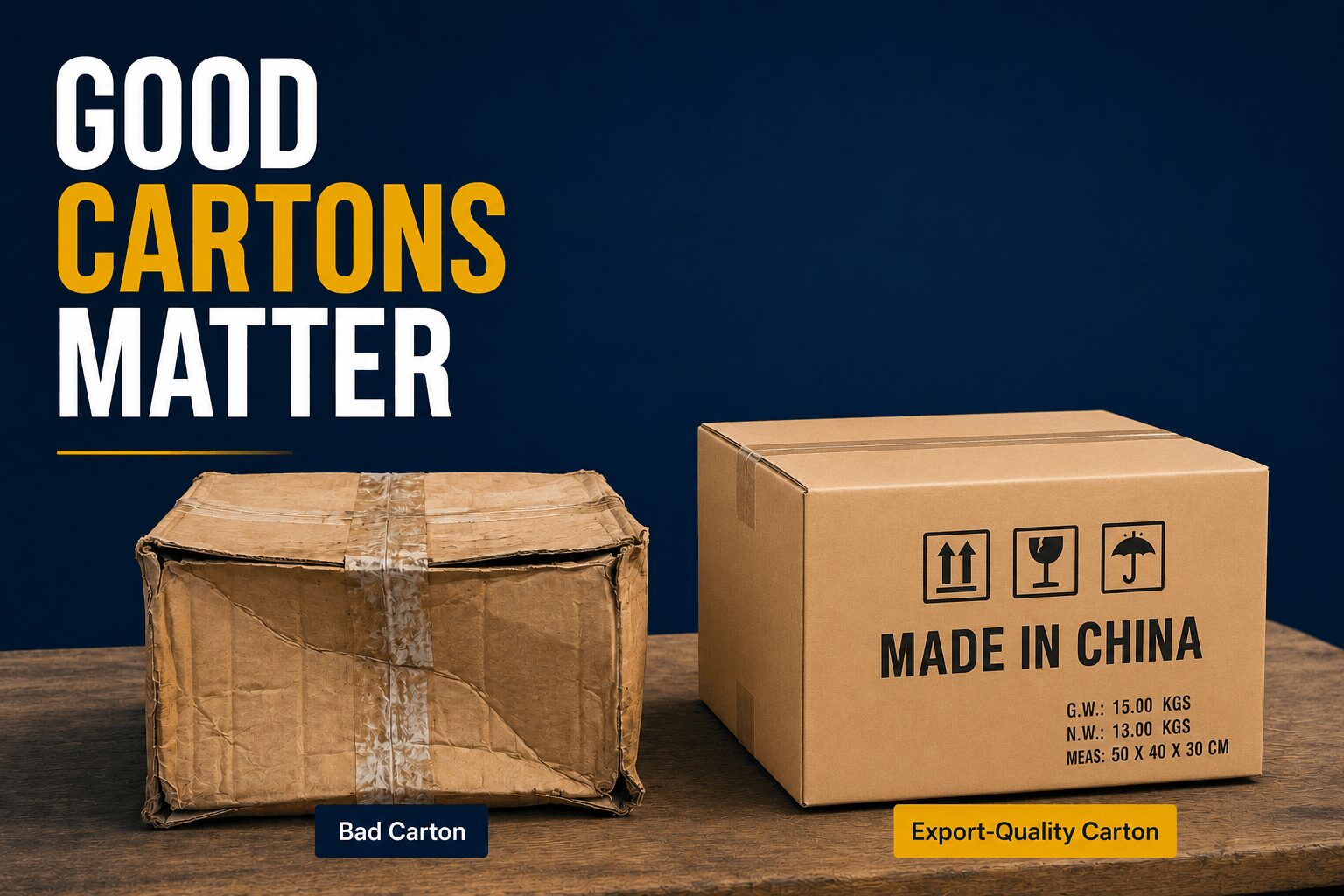
The carton needs to suit the weight, size and risk level of the product. Heavy or fragile goods usually need stronger corrugated cartons than soft goods. If the carton is already bent, soft, torn or bulging before pickup, it is not a good sign.
Testing standards such as ISTA’s package testing procedures are a useful benchmark if you want to specify carton strength objectively rather than relying on a supplier’s word.
Proper Internal Protection
The outer carton alone is not enough. Products may need inner cartons, foam, moulded inserts, bubble wrap, corner protection, dividers, polybags, padding or other protective material. Goods should not be loose inside the carton unless the product type makes that safe.
Correct Carton Size
Oversized cartons can collapse because empty space creates weak points. Overfilled cartons can split, crush retail boxes or damage the product inside. The carton should be packed firmly, but not forced closed.
Suitable Sealing
Thin tape and poor sealing can fail quickly. Heavier cartons may need reinforced tape, stronger sealing, strapping, edge protection or palletisation depending on the product and freight method.
Moisture Protection Where Needed
Some goods need plastic wrapping, desiccants, pallet wrapping or better warehouse storage before shipment. Moisture problems can damage cartons, labels, retail packaging and the goods themselves.
Clear Carton Marks
Cartons should be easy to count, identify and match against the packing list. Where relevant, they may need SKU labels, carton numbers, handling marks, barcode labels, FBA labels or marketplace-specific labels.
If freight cost depends on carton size, use the Prestige Sourcing freight volume calculator to estimate CBM and volumetric weight before approving the final shipment plan.
Warning Signs Your Cartons May Not Be Export Quality
Before paying the balance or approving shipment, check for obvious packing risks.
- The supplier cannot provide clear photos of the finished cartons.
- The cartons look thin, soft, reused, dirty, wet or crushed.
- The cartons are bulging at the sides.
- The carton seams are splitting.
- The supplier says “standard packing” but cannot explain what that means.
- Retail boxes are packed loose with little protection.
- Fragile products have no dividers or corner protection.
- Heavy goods are packed into large cartons with no reinforcement.
- The carton count, dimensions or gross weight keeps changing.
- The supplier refuses to discuss packing improvements.
One warning sign does not automatically mean the supplier is bad. But it does mean you should check before the goods move further through the supply chain.
Why Carton Quality Matters More for LCL and Consolidated Shipments
LCL and consolidation can be useful when you are buying from multiple suppliers or do not have enough volume for a full container. They can also help reduce the cost impact of fixed per-shipment fees when planned properly.
But these shipment types often involve more handling. Cartons may be received, counted, stored, moved, stacked, consolidated, loaded, unloaded and reloaded before they reach the final destination.
That extra handling is exactly why export quality cartons matter more here. A weak carton may survive sitting in a factory warehouse, but fail once it is handled several times by different parties.
Prestige Sourcing can help with China sourcing, purchasing and logistics support, including supplier coordination, product checks, packaging checks, warehousing and freight coordination.
Do Not Pay the Balance Blindly
The best time to catch packing problems is before the supplier has been fully paid and before the goods are handed over for freight.
At minimum, ask for clear photos or videos showing:
- The finished goods before packing.
- The inner packaging.
- The retail packaging if applicable.
- The sealed outer cartons.
- Carton marks and labels.
- Carton count.
- Carton condition from multiple angles.
- Any damaged or repacked cartons.
Supplier photos are helpful, but they are not the same as an independent China-side check. If the order is high value, fragile, brand-sensitive or going to a marketplace fulfilment centre, it is usually worth having someone check the packing before the shipment leaves China.
How Prestige Sourcing Can Help With Export Quality Cartons
Prestige Sourcing can act as your China-side support before goods are exported. Depending on the product, order value, supplier location and service scope, we may be able to help with:
- Checking carton condition before dispatch.
- Reviewing whether cartons appear suitable for the product and freight method.
- Checking for crushed, wet, torn, soft, dirty or reused cartons.
- Confirming carton count, visible marks, dimensions and gross weight where available.
- Taking photos or videos before goods are handed over.
- Receiving goods at our Shenzhen office or partner warehouses where suitable.
- Coordinating with suppliers if cartons need to be strengthened or replaced.
- Arranging repacking, outer carton upgrades or consolidation where practical.
- Helping plan freight after packing has been reviewed.
This does not remove every risk. Freight damage can still happen. But it gives you a better chance of finding obvious problems while the goods are still in China, when issues are usually easier and cheaper to fix.
Questions to Ask Your Supplier Before Production Finishes
Packing should be discussed before the supplier finishes the order. Leaving it until the cartons are sealed often creates delays, extra cost or arguments.
- What outer carton will be used?
- Is the carton suitable for export freight?
- How many units will be packed per carton?
- What internal protection is included?
- Will the retail boxes be protected from crushing?
- Will the cartons be shipped loose or palletised?
- What are the final carton dimensions and gross weight?
- Can the supplier provide photos before and after sealing?
- Can the supplier upgrade the packing if needed?
- Who is responsible if the cartons arrive damaged at the China warehouse?
If timber pallets, wooden crates or specialised packaging are being used, check requirements with your freight forwarder, customs broker or relevant authority before shipment. Treatment, documentation and destination rules can matter — for example, IPPC/ISPM 15 rules on wood packaging material cover treatment and marking requirements that many destination countries enforce at the border.
When Repacking Is Worth the Cost
Repacking costs money, so it needs to make commercial sense. But cheap packing is not cheap if it creates damaged stock, refund requests, retailer rejection, marketplace problems or poor customer reviews.
Repacking or carton strengthening may be worth considering when:
- The goods are fragile, heavy, electronic, glass, ceramic or easily scratched.
- The retail packaging needs to arrive clean and saleable.
- The shipment is going through LCL, consolidation or several warehouse handovers.
- The supplier cartons are already visibly damaged.
- The supplier used domestic packing instead of export packing.
- The goods are going to Amazon FBA, a 3PL, a retailer or a marketplace warehouse.
- The order value is high enough that damage would hurt cash flow.
The right answer is not always to repack everything. Sometimes the supplier’s packing is already suitable. Other orders may only need stronger outer cartons or extra protection for fragile SKUs. The decision depends on product value, margin, freight method, destination requirements and damage risk.
Cheap Freight Cannot Fix Bad Cartons
A freight company can move your goods, but it will not usually rebuild poor supplier packaging unless that service has been arranged. If the cartons are weak before pickup, a cheaper freight quote may simply move the same problem further down the chain.
This is especially important when comparing DDP-style quotes, supplier-arranged shipping or very cheap forwarder options. The headline price may look attractive, but you need to know who is receiving, checking, consolidating, labelling, repacking and handing over the goods.
If your shipment involves sourcing, packing checks, warehousing or freight planning, Prestige Sourcing can help through our China-side support services and eCommerce and private label sourcing support.
Simple Export Quality Cartons Check Before Shipment
Before goods leave China, a practical export quality cartons check should cover:
- Are the cartons new, dry, strong and clean?
- Are any cartons crushed, torn, soft, wet or bulging?
- Are the cartons sealed properly?
- Is the internal packing suitable for the product?
- Do the carton marks match the order?
- Does the carton count match the packing list?
- Are dimensions and weights available for freight planning?
- Is repacking needed before handover?
- Are marketplace, barcode, SKU or retail requirements covered?
- Has photo or video evidence been saved before dispatch?
This is basic, but it can prevent expensive problems. A short check before shipment is usually easier than arguing with a supplier, freight company, insurer, customer or marketplace after damaged stock arrives.
Work With Prestige Sourcing Before Your Goods Leave China
Do not treat cartons as an afterthought. Export quality cartons, suitable internal protection, clear labels and proper freight planning can make a major difference to how your stock arrives.
Prestige Sourcing can help check carton condition, receive goods in our Shenzhen office or partner warehouses where suitable, coordinate with suppliers, arrange packing improvements, and support freight planning before the shipment leaves China.
If you already have a supplier, send us the product details, supplier location, carton photos, shipment size, destination and freight plan. We can help you decide what should be checked before you pay the balance or approve dispatch.
Contact Prestige Sourcing to discuss carton checks, warehouse receiving, packing review, consolidation and freight support from China.