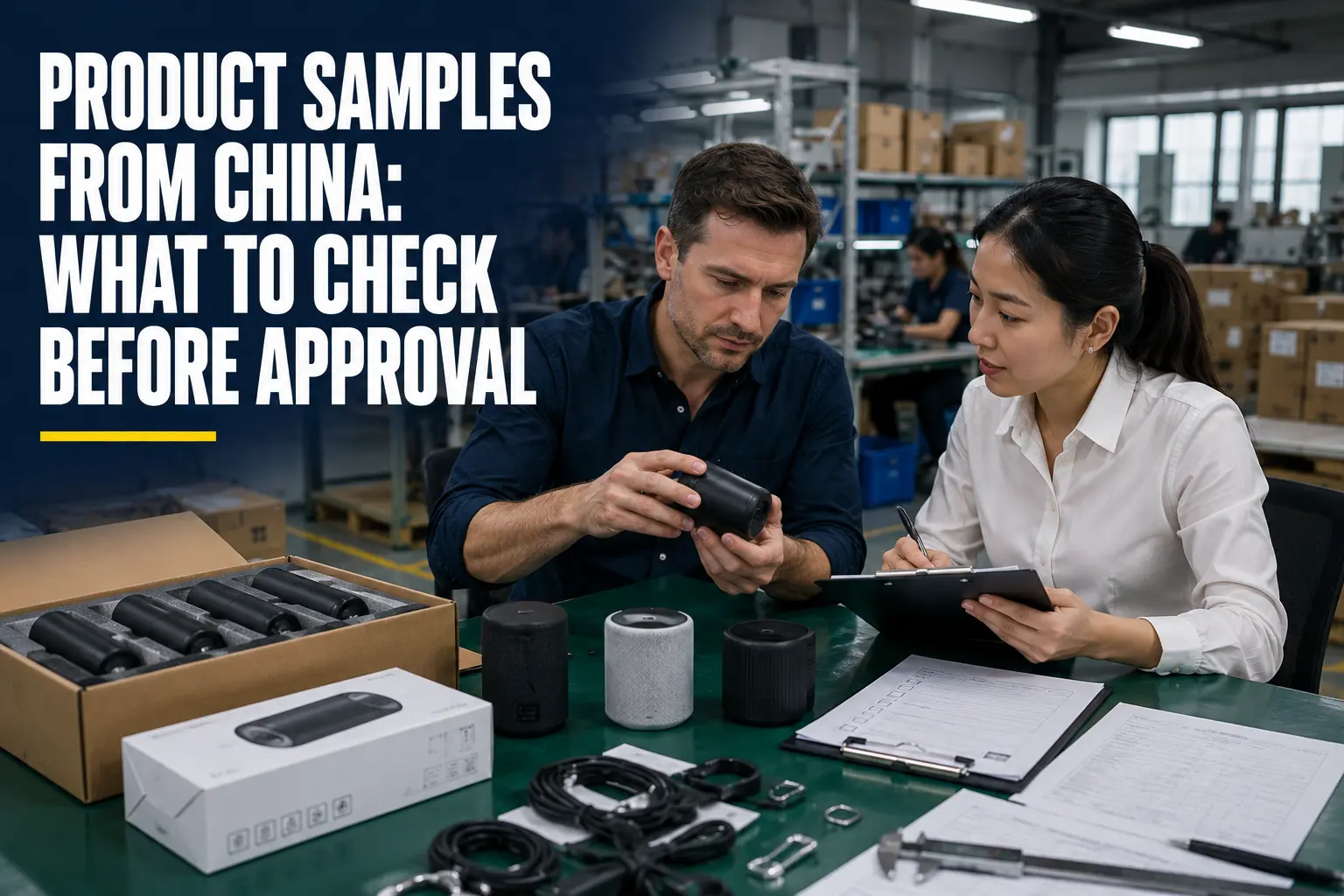
Product samples from China should be treated as a production-control tool, not simply something to photograph and approve. A good sample lets you check materials, dimensions, function, finish and packaging before committing to a larger order.
However, a sample only helps if you compare it against clear requirements. Approving something because it “looks good” is one of the easiest ways to carry an unresolved problem into hundreds or thousands of production units.
Why product samples from China matter
A quotation describes what the supplier says it will make. A physical sample gives you something you can inspect, measure, test and compare against the agreed specification.
Samples are especially important when an order includes:
- Custom dimensions, materials or colours.
- Private label branding or retail packaging.
- Parts that must fit another product.
- Electrical, mechanical or performance requirements.
- Workmanship details that are difficult to describe.
- New moulds, tooling or production methods.
A good sample does not prove that a supplier can reproduce the same quality consistently in bulk production. What it does give you is a much stronger reference for what should be manufactured next.
Know which type of sample you are approving
Not every sample represents the same stage of development. Before approving anything, confirm what the supplier has actually sent.
Stock sample
A stock sample shows an existing product the supplier already makes. It can help you assess general construction, finish and function, but it may not include your exact material, colour, component, logo or packaging.
Development sample
A development sample includes changes requested by the buyer. Check it against the written change list rather than relying on memory or simply comparing it with the original sample.
Pre-production sample
A pre-production sample should reflect the materials, components, artwork and production method intended for the bulk order. For a custom product, this can be the most important approval point before manufacturing begins.
Approved reference sample
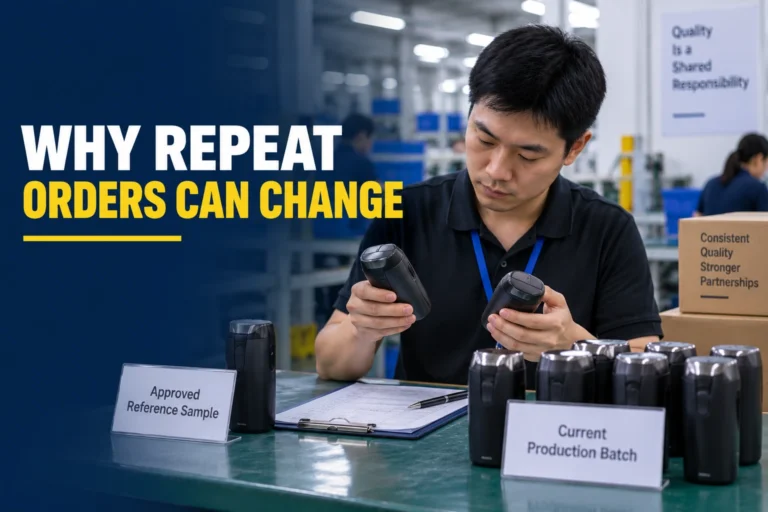
Once a version is accepted, keep it as the physical reference for production and later inspection. Ideally, both you and the supplier should retain a clearly identified matching sample.
Check the sample against the written specification
Do not start with a general impression. Open the product specification and work through it systematically.
- Overall dimensions and weight.
- Material type, grade, thickness or composition.
- Colour, texture, coating and finish.
- Components, accessories and included parts.
- Logo size, position and application method.
- Required functions and performance.
- Assembly, fit and compatibility.
- Warnings, labels and instruction content.
Use suitable measuring or testing equipment where necessary. A visual check is not enough when tolerances, electrical performance, load, fit or material composition are commercially important.
Test the sample in realistic use
A sample can pass a quick demonstration and still fail during normal use. Test it the way a customer is likely to handle, assemble, carry, clean, charge, install or store it.
Depending on the product, useful checks may include repeated operation, fit testing, wash testing, load testing, charging cycles or testing with connected accessories.
Some products require specialist laboratory testing rather than an informal in-house test. For regulated or safety-critical products, confirm the requirements in the destination market with the relevant authority, laboratory or compliance specialist before production.
Inspect workmanship and finish closely
Look at the sample under good lighting and from several angles. Common problems include scratches, dents, stains, sharp edges, loose threads, uneven seams, glue marks, poor paint coverage, weak joins and inconsistent gaps.
Decide which defects are unacceptable and which are minor. Write these expectations down. Instructions such as “make it better” or “quality must be perfect” are too vague to control production.
Where appearance is important, use close-up photos and agreed reference images. For colour-sensitive products, use an agreed colour reference rather than relying only on how something appears on a phone or computer screen.
Check packaging with the product sample
Product approval and packaging approval should not be left as separate last-minute decisions. Put the actual product inside the proposed packaging and assess protection, fit and presentation together.
- Retail box dimensions and construction.
- Inserts, dividers, foam or other protection.
- Artwork, spelling, colour and print quality.
- Barcode, SKU and label placement.
- Instructions and included accessories.
- How the retail pack fits inside the export carton.
A retail box can look excellent and still provide weak transport protection. Packaging needs to survive the actual shipping and handling process, not just look good when the sample arrives.
Consolidate samples from multiple China suppliers
If you are comparing several suppliers, sending every sample separately by international courier is not always the best option.
Instead, samples from different factories or Alibaba suppliers can often be sent to one China warehouse, held until everything arrives, and then consolidated into one onward shipment where practical.
This can be useful when you are:
- Comparing several suppliers for the same product.
- Ordering samples across multiple product categories.
- Building a private label range with different factories.
- Testing packaging, accessories and the main product from separate vendors.
- Trying to avoid multiple separate international shipments.
Prestige Sourcing can help receive goods from multiple suppliers in China, coordinate arrivals and arrange warehousing and consolidation before onward freight.
Once the samples are together, shipping can be arranged based on the destination, product type, shipment size and urgency. Depending on the cargo, that may include express courier, air freight, sea parcel or another suitable international freight option through our China worldwide freight service.
Consolidation is not only about freight cost. It also gives you a China-side control point before the samples leave. For example, supplier parcels can be received, obvious outer damage can be identified and missing shipments can be followed up before everything is sent internationally.
However, not every product can simply be combined and shipped together. Batteries, liquids, powders, magnets, oversized items, fragile products and other restricted cargo may require different shipping channels or documentation. Check the product details before asking suppliers to send everything to one warehouse.
Record every sample revision
Sample development becomes risky when decisions are scattered across email, WhatsApp, WeChat and marketplace chat.
Keep a simple revision record showing:
- Supplier name and product code.
- Sample version and date received.
- Changes requested.
- Photos of issues or required corrections.
- Supplier response.
- Approval status.
- Any accepted deviation.
Do not approve “the sample” without identifying the exact version. If version three is approved, versions one and two should no longer be treated as valid production references.
Keep the approved reference sample
Once the sample is accepted, keep it in good condition and label it clearly. Do not give away the only physical reference or rely solely on supplier photographs.
The approved sample can later support:
- Production instructions.
- Supplier discussions about deviations.
- Pre-shipment inspection.
- Repeat-order comparisons.
- Investigation of customer complaints.
For an important product, ask the supplier to retain a matching approved sample and confirm in writing that bulk production must match the approved specification and sample, subject to any agreed tolerances.
Common sample approval mistakes
- Approving from supplier photos instead of receiving the sample.
- Checking appearance but not function or fit.
- Ignoring packaging until production is almost finished.
- Accepting a substitute material without updating the specification.
- Failing to test with the intended accessory or installation.
- Approving a handmade sample that may not reflect bulk production.
- Starting production while corrections are still open.
- Keeping no approved reference for later inspection.
- Shipping multiple supplier samples separately without first checking whether consolidation makes sense.
Move from sample approval into production control
If you are still deciding which supplier or product is worth sampling, our China sourcing service can help compare options and coordinate sample requirements before you commit to a larger order.
If you already have suppliers but need help managing sample requests, changes, packaging details or the shipping handover, China purchasing support may be more suitable.
Once the correct sample has been approved, it should become part of the production-control process. Bulk manufacturing can involve different material batches, workers, machinery or packaging, so approving one good sample does not remove the need for later quality checks.
Approve the sample, then control what happens next
The safest way to approve product samples from China is to be specific, written and version-controlled. Check the materials, dimensions, function, workmanship and packaging rather than approving based on appearance alone.
Then decide the next step based on the project. That may mean requesting another sample, consolidating samples from several suppliers, approving bulk production, arranging quality control or shipping the samples internationally.
Prestige Sourcing can support the process from China-side sourcing and supplier coordination through to sample consolidation and international freight planning.
Request a Quote if you need help receiving samples from multiple suppliers, consolidating them in China or arranging onward shipping to your destination.