When buyers need to verify Chinese supplier test report evidence, they should answer two separate questions. First, is the report authentic? Second, does it actually apply to the product they intend to buy?
A genuine laboratory report can still be unsuitable. It may cover another model, an older design or only part of the testing you need. So checking the document itself is only the first step.
Before relying on a supplier’s report, compare the laboratory, report number, sample, model, standard and test scope. Then check whether the issuing laboratory can confirm the report independently.
Why a genuine test report may still be the wrong report
Buyers sometimes treat a recognised laboratory name or a professional-looking PDF as enough evidence. However, the important question is what the laboratory actually tested.
One supplier may sell several similar products under different model numbers. A report for one model does not automatically cover every variation in the range.
Materials, electrical components, batteries, coatings or construction can also change. Therefore, an older report may describe a product that no longer matches current production.
In practice, you need to check both authenticity and applicability. A report only becomes useful when those two points line up.
1. Ask for the complete test report
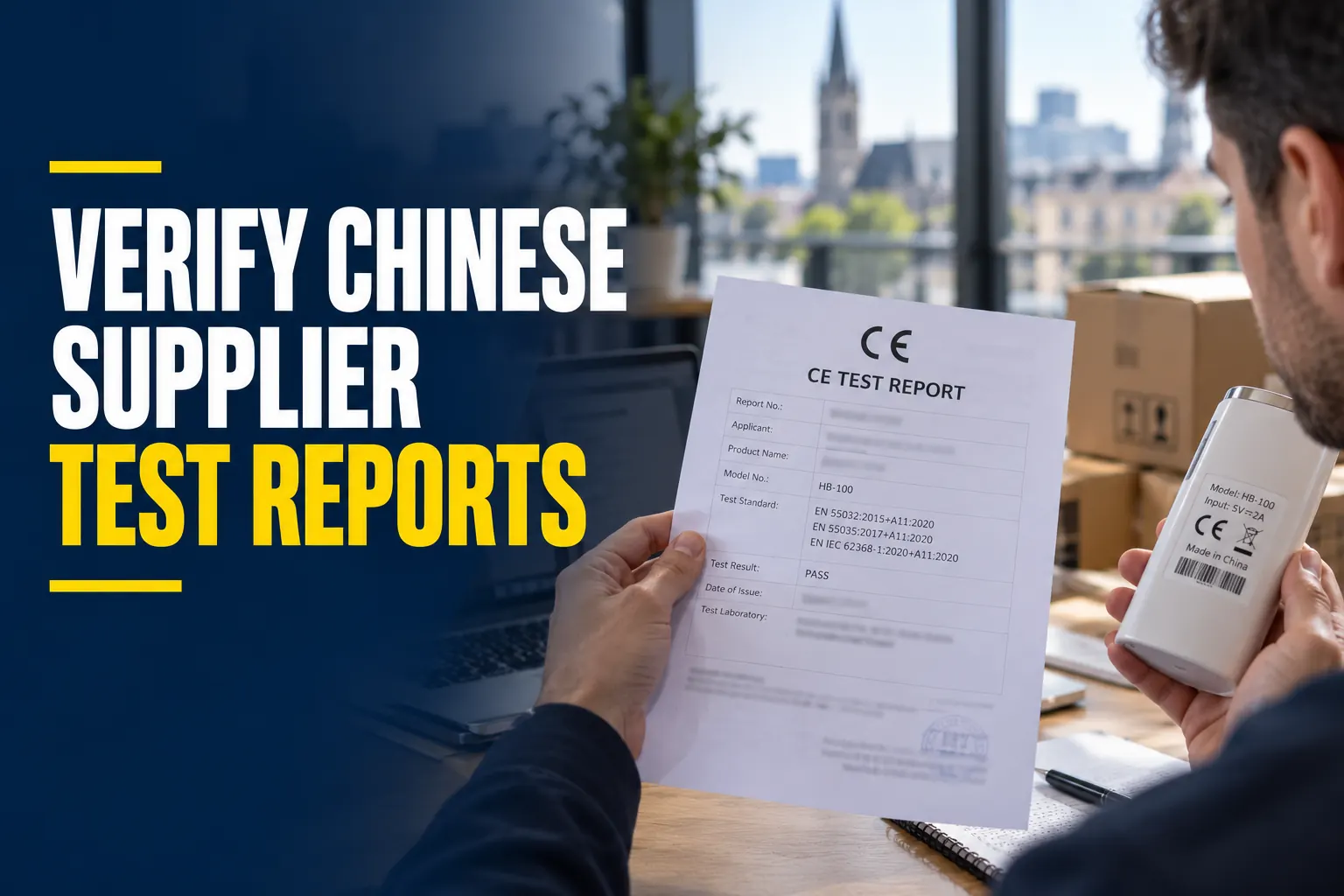
Start by requesting the full report rather than a screenshot, certificate image or selected pages. You need enough information to trace what the laboratory received and tested.
Check whether the document includes:
- the laboratory’s full name and contact information;
- a report or reference number;
- the applicant or client named on the report;
- the product name and model number;
- sample descriptions or photographs;
- the test standard or method;
- test dates and the report issue date;
- individual results, conclusions and remarks; and
- page numbers or another way to identify the complete document.
A short certificate may summarise a larger report. If important details sit in the underlying report, ask for that document as well.
2. Confirm who issued the report
Next, identify the laboratory named on the document. Do not rely only on a logo, stamp or supplier-provided QR code.
Instead, find the laboratory through its own official channels. Large testing groups and many independent laboratories provide report lookup tools or verification contacts.
Use the report number and other identifying information when you contact them. Where possible, ask whether they issued that specific report.
Crucially, avoid using only an email address or verification link supplied inside the supplier’s message. An independent route reduces the risk of following a false contact.
3. Match the report number and document details
Once you identify the issuing laboratory, compare the report reference carefully. Small differences can matter.
Check the report number on the first page against later pages, attachments and any verification result. Also look for unexpected changes in formatting, fonts, dates or company names.
However, appearance alone cannot prove that somebody altered a document. Treat visual inconsistencies as a reason to investigate further, not as a final conclusion.
If the laboratory confirms the report number, compare the details it confirms with the PDF your supplier provided.
4. Check the exact product and model number
This step often matters more than the report’s appearance. The product on the report should match what you actually plan to order.
Compare the model number against the supplier’s quotation, specification sheet, product label and sample. If the numbers differ, ask the supplier to explain why.
For example, a factory may use one model family for several variants. That does not automatically make the report unsuitable. However, you need evidence showing which variants the testing covers.
Do not accept a vague statement such as “same product” without checking the technical differences.
5. Compare the tested sample with your product
A matching model number helps, but it does not settle the question. You should also compare the sample description and photographs inside the report.
Look at features that could affect the test result, including:
- materials and finishes;
- dimensions and construction;
- electrical ratings;
- power supplies or chargers;
- battery type and capacity;
- components identified in the report;
- product markings; and
- other safety-critical parts.
Then compare those details with your approved sample or current product specification. If production has changed, the supplier should explain whether the report still applies.
6. Check which standard or test method the laboratory used
A report should identify what the laboratory tested against. However, the presence of a standard number does not automatically answer every compliance question.
First, confirm that the report covers the type of testing you expected. Then check whether it tested the whole product or only a specific material, component or characteristic.
For example, one report may address restricted substances while another examines electrical safety or performance. They answer different questions.
Therefore, do not treat one passing report as evidence that the product meets every requirement in your destination market.
7. Read the scope, results and exclusions
Do not stop at a large “PASS” statement on the front page. Read what the laboratory actually assessed.
Some reports cover only selected clauses, samples or customer-requested tests. Others include notes that limit how buyers should interpret the result.
Check whether every relevant test shows a result. Also review remarks, deviations, exclusions and any sections marked as not applicable.
In practice, the detail pages often tell you more than the summary page.
8. Check the dates and whether the product has changed
A report does not necessarily become invalid because it is old. However, time increases the chance that the product or its components have changed.
Ask when the laboratory tested the sample. Then compare that date with later design changes, component substitutions or new suppliers.
If the factory changed something important after testing, request evidence that the existing report still applies. Otherwise, fresh testing may make more sense.
This point matters especially for repeat orders. A report from an earlier product version does not confirm what the factory produces today.
9. Check whose name appears on the report
The applicant on a laboratory report may be the factory, a trading company, a brand owner or another organisation. A different company name does not automatically make the report false.
However, you should understand the relationship. Ask why that company appears on the report and how the tested product connects to your supplier.
Where necessary, request supporting evidence showing that your supplier sells or manufactures the same tested model.
Keep this question separate from broader supplier due diligence. Our guide on supplier verification vs factory audits vs product inspections explains how those checks serve different purposes.
10. Do not rely on QR codes or seals alone
QR codes, stamps, signatures and accreditation marks can support a report. However, none of them replaces independent verification.
A copied document can also contain a copied QR code or laboratory logo. So follow the verification path back to the issuing organisation wherever possible.
If a QR code opens a verification page, compare the displayed report details with the PDF. Do not assume that reaching a real laboratory website means every page in your PDF is genuine.
11. What to do when the laboratory cannot verify the report
Not every laboratory offers a public online database. Therefore, a missing online result does not automatically mean the report is fake.
First, ask the laboratory whether it can confirm the report through another channel. You can also ask the supplier to obtain confirmation directly from the issuer.
If nobody can establish the document’s origin, treat that uncertainty seriously. Before placing a meaningful order, consider whether fresh testing offers better evidence.
A supplier who refuses reasonable questions about an important test report also creates additional commercial risk.
12. When should you request fresh product testing?
Fresh testing may make sense when the existing evidence does not match your order closely enough.
Common reasons include:
- the report covers a different model;
- the factory changed important materials or components;
- the existing test only covers part of the product;
- the laboratory cannot verify the document;
- the report lacks enough information to identify the tested sample; or
- your product requires testing that the existing report does not address.
Before ordering new tests, define exactly what needs checking. Testing can become expensive when buyers request broad test programmes without first identifying the relevant product requirements.
How to verify Chinese supplier test report evidence before paying
A practical review does not need to start with assumptions about whether the supplier is honest. Instead, follow the evidence.
- Obtain the complete report.
- Identify the issuing laboratory independently.
- Verify the report number where possible.
- Match the product name and model.
- Compare the tested sample with your specification.
- Check the standard and testing scope.
- Read the detailed results and exclusions.
- Review test and issue dates.
- Understand the applicant named on the report.
- Investigate any unexplained mismatch before relying on the document.
Keep copies of the report, supplier explanations and laboratory confirmations with your order records. That creates a clearer trail if questions arise later.
Report verification does not prove your product complies
This distinction matters. Verifying a report shows that the document appears genuine and helps establish what the laboratory tested.
It does not confirm that your current production matches the tested sample. It also does not prove that the report satisfies every legal requirement in New Zealand or another market.
Your product category, destination, design and intended use determine which requirements may apply. Therefore, confirm those requirements separately before relying on supplier-provided testing.
Likewise, document checks do not replace production quality control. Buyers may still need product testing or inspection depending on the order and risk.
Make test reports part of a wider supplier check
A test report can provide useful evidence, but it should fit into a wider purchasing decision. Supplier identity, commercial terms, product specifications and quality controls still matter.
If you are checking a supplier before sending money, see our guide on how to check a Chinese supplier before paying.
For buyers who want help reviewing supplier information and supporting documents in China, Prestige Sourcing offers China Supplier Verification. We can help you organise the evidence before you decide how to proceed with an order.