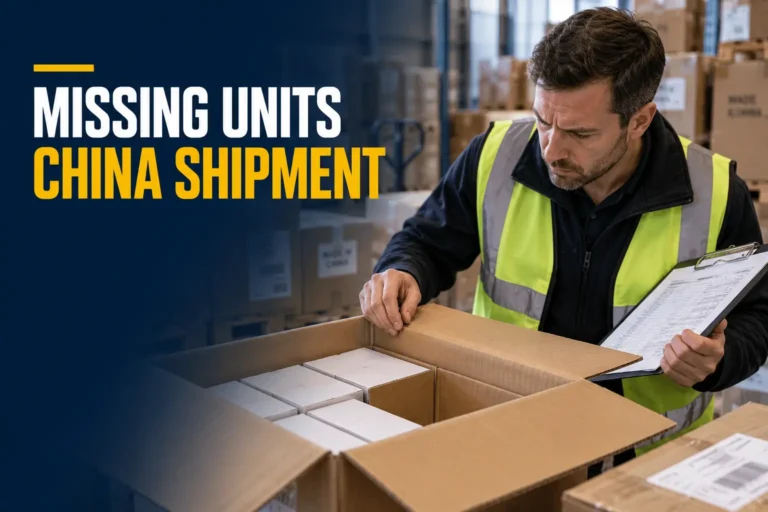
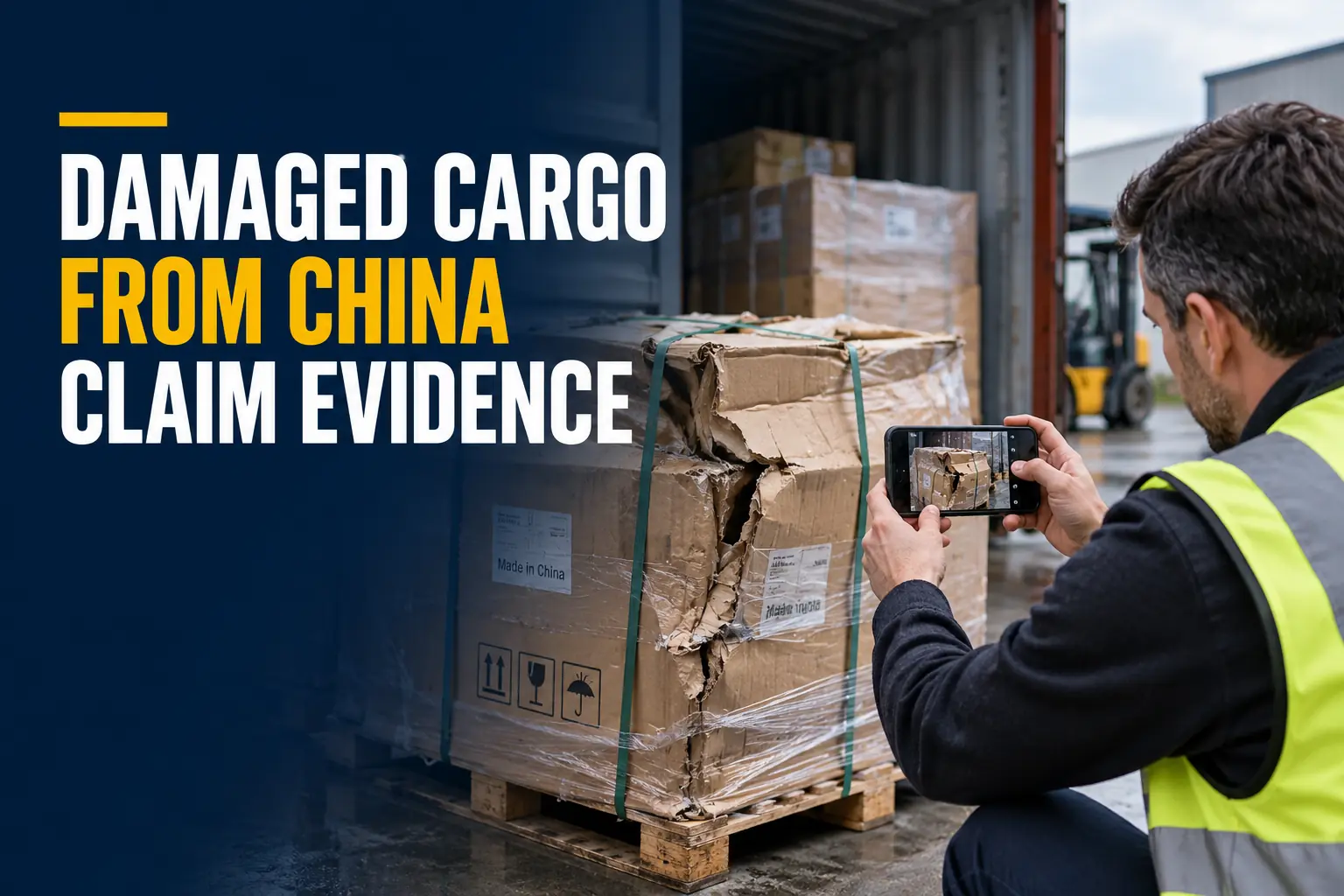
Your damaged cargo from China claim evidence starts before you open the first carton. Photograph the shipment as it arrived, record visible damage on the delivery document and count the packages.
Then notify your freight contact and cargo insurer in writing. Do not wait until you have unpacked everything or calculated the final loss.
The aim is to preserve evidence of the shipment’s condition, identify the affected goods and support a claim with clear records. A damaged product alone does not prove where the damage occurred.
Damaged cargo from China claim evidence: first actions
When the shipment arrives, focus on the condition of the goods and packaging before moving or unpacking them.
- Check the package count. Compare the cartons, pallets or crates against the delivery paperwork.
- Inspect the outer packaging. Look for crushing, punctures, torn wrapping, water marks and damaged pallets.
- Record visible damage. Describe the problem on the delivery receipt or electronic proof of delivery.
- Photograph the shipment. Take wide images before close-ups, including package labels and damaged areas.
- Keep the delivery record. Save a copy showing the date, package count and any damage notes.
- Notify the relevant parties. Contact the carrier or freight forwarder and your insurer without waiting for the final loss assessment.
Do not give a clean delivery receipt when you can see damage. If the driver cannot amend the record, document the problem yourself and send written notice immediately.
Also record the date, time and location where you discovered the damage. These details help establish which handover you were checking.
What to photograph before unpacking
Photographs should show the overall shipment condition and the damage to individual packages.
Start with wide images. Then photograph the affected areas and identify the cartons or products involved.
- All pallets, cartons or crates as received.
- Visible crushing, punctures, moisture or other damage.
- Shipping labels and carton identification numbers.
- Torn pallet wrap, broken straps or damaged wooden packaging.
- Container numbers, seals and relevant container damage, where applicable.
- The position of damaged cartons within the shipment.
- Internal packaging and protective materials during unpacking.
- Damaged products, including their labels or serial numbers where relevant.
Keep the original photographs and videos. Avoid relying only on edited images or cropped screenshots.
Unpack carefully and retain the packaging
Once you have recorded the outside condition, open the affected packages carefully. Follow any applicable Customs or biosecurity restrictions before unpacking.
Photograph the internal packaging before removing the products. Keep damaged cartons, foam, dividers and other protective materials until the insurer or relevant party confirms whether an inspection is necessary.
Do not repair, discard or sell damaged goods before checking the claims process. An insurer may appoint a surveyor to inspect the loss.
However, you should take reasonable steps to prevent further damage. Separate affected stock where necessary and document anything you do to protect the goods.
Record the damaged quantities against the shipment
A photograph of a broken item does not establish how many units suffered damage. You need to connect each affected product to the shipment records.
Create a receiving record with the following information:
- Shipment reference and delivery date.
- Purchase order number.
- Carton or package identification.
- Product description or SKU.
- Quantity expected and received.
- Quantity damaged or missing.
- Description of the damage.
- Photograph references for the affected goods.
For mixed shipments, complete this process by SKU or carton rather than recording one total damaged quantity.
Separate damaged goods from usable stock, but retain their identification. If you later obtain repair quotations or replacement costs, connect those figures to the same receiving record.
Keep shortages separate from physical damage. Missing cartons require different evidence from products that arrived broken.
Which documents do you need for a cargo damage claim?
Carriers and insurers use freight and commercial records to identify the shipment and assess the reported loss.
Gather the relevant documents before submitting the detailed claim.
- Transport document: Bill of lading, air waybill, consignment note or relevant courier record.
- Commercial invoice: Evidence of the products purchased and their invoiced value.
- Packing list: The declared cartons, quantities and product details.
- Proof of delivery: Including any recorded damage or shortage.
- Photographs: Packaging, damaged products, labels and relevant container condition.
- Insurance documents: The policy or cargo insurance certificate, where applicable.
- Receiving records: Warehouse counts, depot records or cargo out-turn reports, where available.
- Claim correspondence: Written notifications and responses from the carrier, forwarder or insurer.
- Financial evidence: Repair quotations, replacement costs or other requested proof of loss.
Factory packing photographs and pre-shipment inspection records can also help. They may show the cargo condition before collection, although they do not automatically establish where later damage occurred.
Keep the complete original documents where possible. Some insurers may request further information or arrange an inspection.
Who should you notify, and when?
Send an initial written notification as soon as you discover the damage. Do not wait for the supplier to respond or for a final repair quotation.
Depending on your arrangements, contact the carrier, freight forwarder, cargo insurer or insurance broker. Check which party actually contracted for the relevant transport and who holds the insurance policy.
Your initial notification should include:
- Shipment or booking reference.
- Date and place of delivery.
- Number of packages received.
- Description of the visible damage or shortage.
- Photographs and delivery record, if available.
- Confirmation that you are checking the full extent of the loss.
- A request for claim instructions, notification deadlines and any required inspection.
You can provide the final damaged quantities and financial evidence later, subject to the applicable claim requirements.
Do not assume every freight claim has the same deadline. Different transport contracts, liability rules and insurance policies can impose different requirements.
Some marine cargo insurers require immediate notification to relevant third parties. Check your own policy and transport terms rather than relying on a general time limit.
Was the damage caused by transport or the supplier?
Damaged cargo does not always mean the freight company caused the problem.
The product may have suffered damage during transport. Alternatively, a manufacturing defect or unsuitable packaging may explain its condition.
Compare the receiving evidence with the records from China:
- Supplier packing specifications.
- Photographs taken before dispatch.
- Pre-shipment inspection results.
- Factory quality control records.
- Warehouse receiving and loading records.
- Any documented damage at an earlier handover.
These records can help narrow down the possible cause. However, photographs alone may not establish which party was responsible.
Supplier warranties and cargo insurance serve different purposes
A supplier warranty may address product defects, depending on the purchase agreement. It does not automatically cover damage during international transport.
Likewise, cargo insurance responds according to its policy terms. Check the insured journey, exclusions, excess and the parties entitled to claim.
Your agreed Incoterm also matters because it identifies when transport risk transfers between buyer and seller. However, Incoterms do not replace the insurance policy or the contract of carriage.
Do not assume the freight provider must reimburse the full product value. Carrier liability may have limits, while insurance coverage depends on the policy.
Before future bookings, confirm whether insurance forms part of your freight arrangement. Our guide to China to NZ freight quotes and excluded costs explains why you should check the quoted service scope.
Damaged cargo arriving in New Zealand
For New Zealand importers, the key question is where the damage first became visible.
LCL cargo may move through a deconsolidation depot before final delivery. FCL cargo may pass through separate port, container unpacking and road transport stages.
Ask the receiving depot or warehouse to record visible damage when it first handles your shipment. Retain any available out-turn records, delivery documents and receiving reports.
Follow MPI requirements before opening uncleared cargo
New Zealand biosecurity requirements can affect when and where cargo may be unpacked.
MPI requires sea containers to follow approved border-clearance procedures. This generally involves an approved transitional facility or another authorised arrangement.
If your container or cargo has not received the necessary clearance, do not open or move it outside the permitted process.
Where possible, arrange for the authorised facility operator to record visible damage and preserve the relevant receiving evidence.
Keep any MPI inspection, treatment or release records that relate to the shipment. Follow MPI directions before disposing of restricted or uncleared material.
Check the domestic delivery contract separately
Do not assume the international shipping contract also governs every New Zealand road transport arrangement.
Under section 274 of the Contract and Commercial Law Act 2017, a covered domestic carriage claim against a contracting carrier generally requires written notice within 30 days of the carrier’s responsibility ending, subject to statutory exceptions.
However, that provision does not govern international carriage. Other contractual or insurance notification requirements may be shorter.
Therefore, report damage immediately and check the terms that apply to the particular shipment and transport leg.
Prevent the same damage on your next China shipment
Once you have recorded the loss, review what could have prevented it.
Check whether the factory followed the agreed packaging requirements. Compare its packing photographs with the receiving evidence and identify any gaps in the handover records.
For future orders, confirm the carton strength, internal protection, crating requirements and handling instructions before dispatch.
If product damage appears linked to production or packing, consider whether factory checks would help before the supplier releases the next order. Our guide to production monitoring in China explains how to maintain better oversight while orders are underway.
Also confirm the cargo insurance arrangements before booking freight, rather than after a shipment arrives damaged.
Prestige Sourcing can help you review the China side of your supply chain before the next shipment moves. Through our Supply Chain Consulting service, we help importers clarify supplier packing requirements, shipment preparation, documentation and freight handovers.
If recurring damage or unclear supplier responsibilities are creating problems, contact Prestige Sourcing to discuss the processes that need attention before your next order leaves China.