If you import machinery, China-NZ biosecurity checks should start before the factory packs it. MPI requires machinery to be clean and free from pests. Used outdoor or targeted machinery can also need certified cleaning or management through an MPI-approved system. Check the correct import pathway before paying for crating or booking freight.
This guide covers what to arrange with the Chinese supplier before export. MPI makes the final biosecurity clearance decision in New Zealand.
Import machinery China NZ biosecurity: check the MPI pathway
MPI’s Vehicles, Machinery and Parts Import Health Standard covers machinery arriving by sea or air. The requirements change with the type of machine, whether it is new or used, and its export history.
Before committing to a shipment, collect these details from the supplier:
- What the machine does, including its make, model and identifying number
- Whether it is new, used, refurbished or assembled from used parts
- For used machinery, where it has operated or been stored
- Whether it is outdoor machinery, such as farming, forestry or construction equipment
- How it will travel, including any transit or storage in other countries
Use MPI’s machinery requirements tool to identify the likely pathway. Then check the current Import Health Standard for the documents and conditions that apply. The tool is a quick guide, not a substitute for the standard.
New machinery and used outdoor machinery need different preparation
New machinery: Ask the factory to check the complete unit for soil, insects, plant matter and other contamination. New does not mean exempt from cleanliness requirements. Do not assume every new machine needs a formal cleaning certificate or offshore treatment.
Used indoor machinery: Confirm the actual use and storage history, then check its MPI classification. The importer still needs to meet the cleanliness requirements.
Used outdoor or targeted machinery: MPI provides a pathway using an approved system or certified cleaning when the additional Schedule 3 BMSB rules do not apply. Ask which pathway the supplier can actually meet before the machine leaves China.
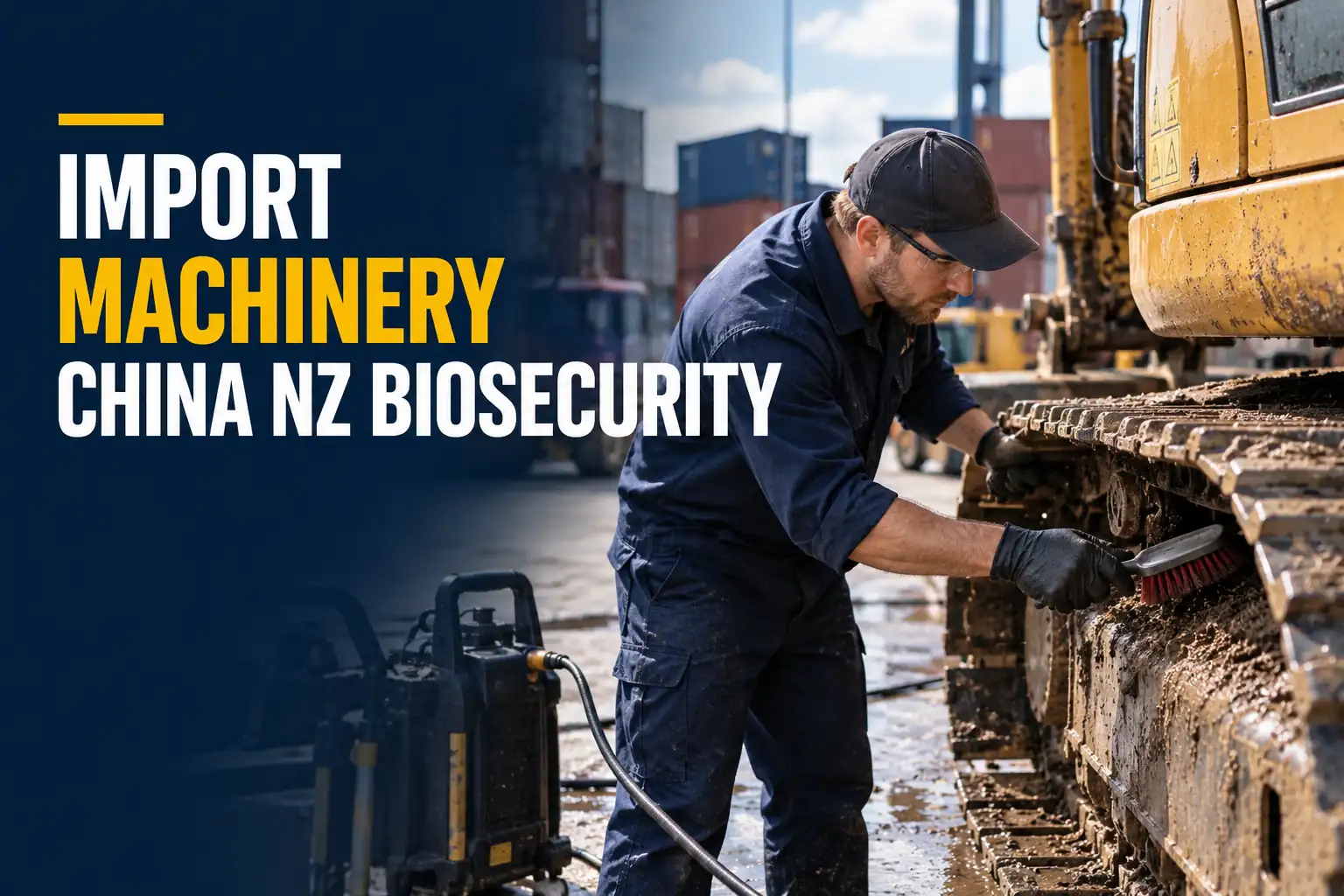
For example, a used earthmoving machine needs more attention than a new machine stored indoors. Soil and plant matter can collect inside tracks, under guards and behind panels.
Clean the machine before wrapping or crating
Tell the supplier that biosecurity cleaning is separate from routine presentation cleaning. A clean-looking outside does not prove that enclosed areas are free from contamination.
For used outdoor equipment, MPI’s guidance calls for internal and external cleaning. It also recommends removing panels and dismantling accessible parts where possible, so cleaners can reach concealed areas.
Areas worth checking before dispatch
- Tyres, tracks, track pads, wheels and undercarriages
- Behind panels, guards, covers and shields
- Engine bays, ventilation spaces and mechanical compartments
- Buckets, blades, forks and removable attachments
- Frames, steps, cabins, floors and storage spaces
- Joints, recesses and spaces around cables or hoses
Remove soil, seeds, insects, vegetation, animal material and other organic debris. Then check the cleaned surfaces again for remaining contamination.
Keep the machine somewhere clean after the final check. Otherwise, outdoor storage or a dirty loading area could undo the cleaning before the supplier closes the crate.
If a machine has areas that cannot be accessed safely, raise that with the importer and broker early. Do not describe an incomplete clean as a certified clean.
Collect cleaning evidence and shipment details before export
Used outdoor or targeted machinery following the certified-cleaning pathway needs a cleaning certificate. The certificate must confirm internal and external cleaning, including dismantling where possible. MPI requires the cleaning certificate before the machine arrives in New Zealand.
MPI’s requirements specify the cleaning date, physical address and the name and signature of the person who cleaned or supervised the machine. Use the official MPI cleaning certificate template rather than asking for a vague statement that the machine is clean.
Photographs can help you check what the supplier did, particularly behind removable guards and under the machine. However, photos do not replace the certificate or an MPI-approved system when those are required.
Information to send your New Zealand broker
- Machine description, make, model and serial or other identification number
- Whether it is new or used, and where it was previously used or stored
- Seller and buyer names, plus the buyer’s full address
- Place of export and any relevant transit or storage countries
- Shipment details, including the bill of lading and container number when available
- Relevant cleaning, approved-system or treatment documents, if required
- Number and type of tyres, where applicable
MPI requires a machinery consignment declaration through Trade Single Window. Its guidance says to complete this at least several days before arrival. Agree with the broker who will submit it and when.
Do not confuse this machinery declaration with the separate sea-container quarantine declaration. Both can matter on the same shipment.
Check wooden packaging and sea-container paperwork
Ask the supplier what material they will use for the crate, pallet and timber bracing. Solid wood packaging can fall under MPI’s wood-packaging Import Health Standard and ISPM 15 controls.
If the supplier uses solid wood, confirm the applicable treatment and marking requirements before construction. Check that the relevant ISPM 15 marks are legible. Processed wood products, such as plywood, can have different requirements, so get the exact material description rather than assuming.
MPI explains the options in its wood packaging guidance.
If the machine ships inside a sea container, the container also needs to meet MPI rules. The packing or export facility manager must sign a sea-container quarantine declaration confirming the required checks.
Arrange the signed declaration with the packing facility before the container departs. Your broker will also need the container and cargo information for border clearance. Check the MPI container and cargo guidance for the separate steps.
Does BMSB treatment apply to machinery coming from China?
Not automatically. China is not on MPI’s published Schedule 3 list of countries subject to the seasonal brown marmorated stink bug (BMSB) machinery controls. A machine exported directly from China therefore does not trigger those extra measures solely because of its Chinese origin.
However, check the complete route. MPI has separate rules for machinery that passes through BMSB-risk countries. Seasonal requirements can apply to target machinery exported from those countries on or after 1 September and arriving in New Zealand on or before 30 April.
The details also depend on the commodity and how it travels. If a freight provider proposes transshipment or overseas storage, check the route against MPI’s BMSB guidance before accepting it.
Even when seasonal BMSB measures do not apply, machinery must still meet its general cleanliness and documentation requirements.
Pre-shipment checklist for your Chinese supplier
- Identify the machine. Collect its make, model, serial number and use history.
- Confirm the MPI category. Check whether the machinery is new, used indoor, or used outdoor or targeted equipment.
- Assign the cleaning work. Confirm who will access enclosed spaces and remove contamination.
- Agree on the evidence. Obtain the MPI cleaning certificate or approved-system evidence where required.
- Approve the packing material. Check wood packaging, ISPM 15 marking and any relevant exemptions.
- Confirm the shipping route. Review transit countries and any relevant seasonal BMSB conditions.
- Collect container documents. Obtain the signed quarantine declaration if using a sea container.
- Send the final file to your broker. Include machine details, cleaning evidence and the expected dispatch information.
Do this while the supplier still has access to the machine. Once the factory seals a heavy crate, correcting a missing cleaning step can mean reopening and repacking it.
Allow for biosecurity work outside the freight price
Cleaning, dismantling, specialist packaging and certification can create China-side costs. In New Zealand, MPI inspection, cleaning, treatment and storage can also lead to additional charges if the shipment needs further action.
Ask who will pay for those items and whether your freight quotation includes them. The China-to-NZ freight quote guide covers common exclusions to check before booking.
Complete documents and proper cleaning help prepare the shipment. However, MPI can still require further checks before granting clearance.
Need help getting the China-side preparation organised?
If the factory, cleaner, crating company and freight provider are working separately, it is easy to miss a handover. You still need one agreed list of what must happen before loading.
Prestige Sourcing’s Supply Chain Consulting service helps importers work through supplier communication, shipment readiness and freight handover planning in China. It does not replace MPI or a customs broker.
Send us the machinery details and where the supplier is based. We can discuss the China-side preparation and coordination needed before the freight booking.