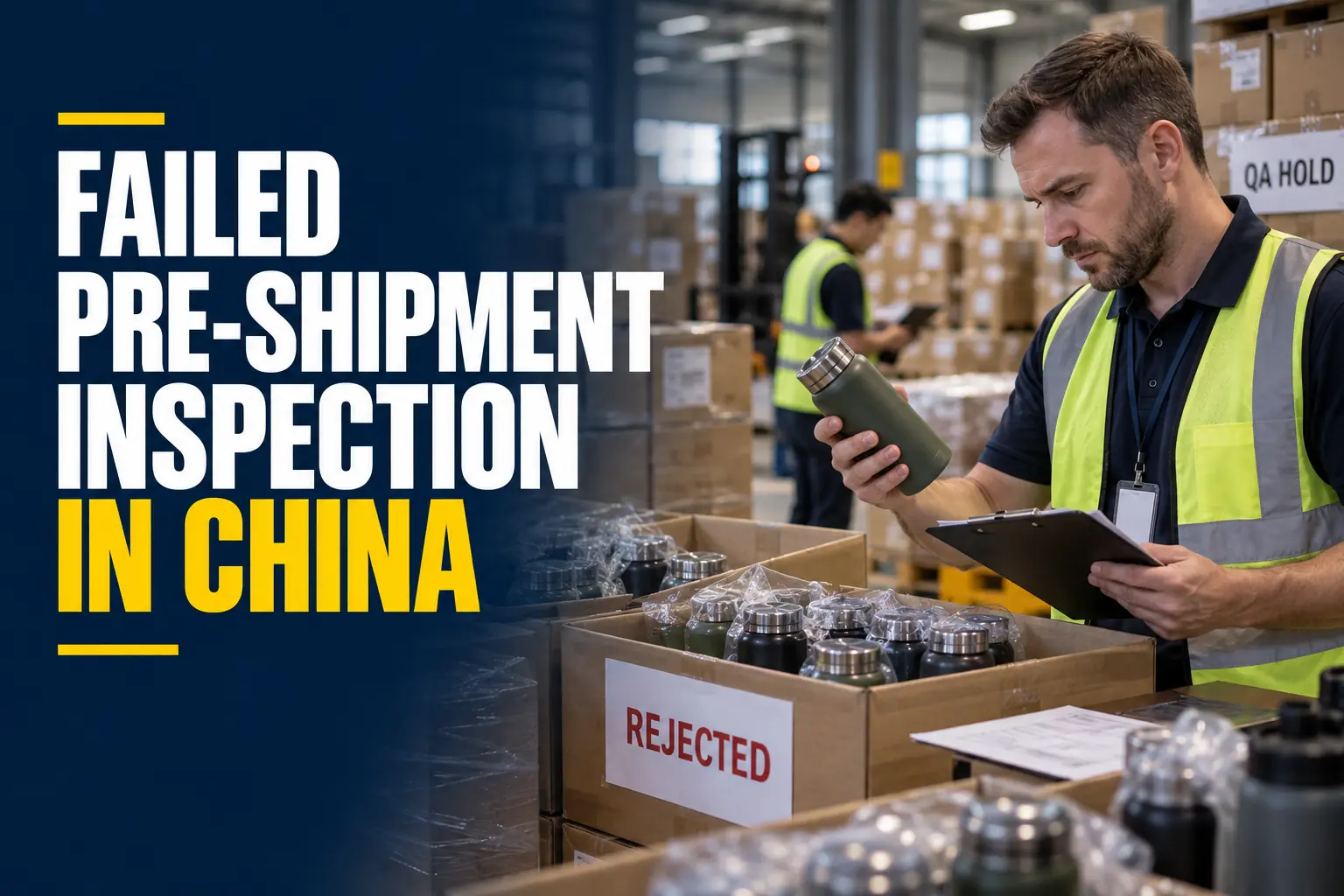
A failed pre shipment inspection China report should trigger a controlled response before the factory releases cargo. The goal is not to argue over the word “fail”. Instead, define what went wrong, how much stock may be affected and what the supplier must correct.
Different failures need different responses. A wrong barcode may need relabelling, while a functional defect may require sorting, repair or replacement. Serious problems may justify rejecting the affected batch.
Before deciding, review the inspection evidence and keep the goods under factory control. Do not allow the supplier to ship first and promise a correction later.
What a failed pre shipment inspection China report actually means
An inspection result only makes sense against the agreed inspection scope. Start with the defect list, photos, measurements, test results and sample size. Then compare those findings with your purchase order, approved sample and written specifications.
A failed result may come from one major issue or several smaller issues. It may affect one SKU, one carton group or the whole production lot. Therefore, the first task is to define the affected stock.
Read our pre-shipment inspection in China guide for the wider inspection process. This article focuses on what happens after the report identifies a material problem.
Step 1: separate defects that need different responses
Do not treat every defect as equal. Group findings by their effect on function, safety, specification, appearance, packaging or saleability. This makes the corrective plan easier to control.
- Critical issues: problems that create an unacceptable safety, compliance or serious functional risk.
- Major issues: defects that can make the product unusable, materially different from specification or difficult to sell.
- Minor issues: lower-level defects that do not normally stop the product from working as intended.
- Packaging or labelling issues: problems with cartons, retail packaging, barcodes, markings or inserts.
These labels should not replace your own product requirements. In practice, the same cosmetic mark can matter differently on industrial equipment and premium retail goods.
Step 2: define which stock the supplier must control
Ask the supplier to identify and separate the potentially affected goods. Do not let the factory mix checked, unchecked and corrected units together. Clear physical separation reduces the chance of defective stock returning to the finished batch.
The required scope depends on the failure. A wrong label across sampled cartons may require a full-lot check. A defect limited to one model or production batch may justify a narrower sort.
Record the quantity, SKU, carton range or production batch involved. Photos can support the record, but they should not replace a proper recheck when the risk is material.
Step 3: agree a corrective action plan before rework starts
A vague promise to “fix the problem” is not enough. The supplier should confirm what work it will complete and when. You should also define the evidence required before release.
Corrective work may include:
- Sorting the affected quantity for the identified defect.
- Repairing or reworking products that can be corrected reliably.
- Replacing defective units, parts or accessories.
- Relabelling products, retail boxes or export cartons.
- Repacking goods where packaging misses the agreed standard.
- Producing missing units where the completed quantity is short.
Agree the acceptance standard before the factory starts. Otherwise, the supplier may complete work that still does not meet your requirement.
Step 4: decide whether remote evidence is enough
Some corrections are easy to confirm remotely. For example, a visible shipping mark may be checked through dated photos from several cartons. Simple evidence can save time when the issue is low risk.
However, photos are weak evidence for hidden, inconsistent or functional defects. A supplier can show corrected samples without proving it corrected the full affected quantity. In that situation, arrange a reinspection.
Prestige Sourcing can coordinate checks and supplier follow-up through our China Quality Control service. The scope can focus on the original failure and the corrective work that followed.
Step 5: recheck the failed points properly
A reinspection should answer the unresolved question from the first report. It does not always need to repeat every original check. However, it should cover enough stock to confirm that the corrective action worked.
Where the supplier sorted the full lot, the inspector can verify the sorted stock and retest the failed points. A wider first failure may justify a wider recheck.
Give the inspector the original report and the supplier’s corrective action plan. That creates a clear before-and-after record.
Rework, recheck or reject?
| Situation | Typical response | Release condition |
|---|---|---|
| Clear, repairable defect with controlled scope | Rework or replace affected units | Evidence or reinspection confirms the correction |
| Defect may affect more stock than the sample shows | Sort the wider lot and recheck it | Reinspection supports the agreed acceptance standard |
| Wrong labels or packaging | Relabel or repack the affected quantity | Corrected packaging is checked before release |
| Serious functional or specification failure | Hold the goods and assess whether reliable rework is possible | Only release if the batch can meet the agreed requirement |
| Unsafe, non-compliant or commercially unusable goods | Reject the affected batch where correction cannot solve the problem | Do not release defective stock for export |
Commercial pressure should not decide the answer on its own. A missed vessel or delayed launch can cost money. However, shipping defective stock can create a larger loss.
Step 6: keep final payment linked to the correction
Your leverage usually falls once you pay the supplier in full. Therefore, do not release the balance because the factory promises to fix the goods later. Link payment to the corrective action and the evidence you agreed.
If your order uses staged terms, review our guide to China supplier payment terms, deposits and final payment. The payment trigger should match the commercial agreement for that order.
Do not create new payment conditions after a dispute starts and assume the supplier must accept them. Strong inspection and payment terms work best when both sides agree them before production.
Step 7: document who can authorise cargo release
Once the supplier completes corrective work, record the final decision in writing. State whether you accept the order, accept agreed exceptions or reject part or all of the batch.
The release record should identify the order, report, correction and any reinspection result. It should also name the person authorised to approve shipment.
Tell the factory, warehouse and freight provider not to release cargo until that approval arrives. This avoids logistics moving ahead of the quality decision.
What not to do after a failed inspection
- Do not focus only on the overall “fail” label without reading the defect evidence.
- Never accept a discount when the stock remains unsuitable for sale or use.
- Do not rely on a promise that the next order will be better.
- Avoid letting the supplier choose a few corrected units as proof of the full batch.
- Do not release cargo while the correction or reinspection remains unresolved.
- Never pay the final balance simply to protect a freight booking.
Build the response into your quality control process
A failed inspection is easier to manage when the response process already exists. Define defect standards, payment triggers, correction rights and release authority before production starts. Then the team can act quickly when a report finds a problem.
For international buyers, Prestige Sourcing can help coordinate the supplier, inspection scope, corrective work and reinspection before export. Our China Quality Control service helps keep those China-side steps organised.
If an inspection has failed, send us the report, product details and supplier position. We can review the practical next steps before you authorise payment or cargo release.