Sourcing from China to New Zealand can work well, but only when the buying process is controlled before money is committed. The risk is not just getting goods shipped. The bigger risk is choosing the wrong supplier, approving the wrong sample, missing packaging problems, ignoring quality control, or finding out too late that freight costs make the product unprofitable.
This guide focuses on sourcing, not just importing. Importing is the process of moving goods into New Zealand. Sourcing is the work that happens before that: finding the right supplier, checking whether they are suitable, getting samples, confirming product details, controlling production risk, preparing the goods properly and choosing a freight path that makes commercial sense.
Prestige Sourcing is a New Zealand-owned sourcing agency based in Shenzhen. That matters because sourcing from China is not only an online search. Local supplier behaviour, sample quality, factory claims, packaging standards, warehouse handover and China-side freight coordination all affect the final result. Being on the ground in Shenzhen gives Prestige Sourcing local insight that overseas-only buyers usually do not have.
This article is for New Zealand importers, Shopify sellers, Trade Me sellers, Amazon FBA sellers, TikTok Shop sellers, Kogan sellers, private label brands, wholesalers, retailers and first-time buyers who want to source products properly before shipping them to New Zealand.
Sourcing From China Is Not the Same as Importing From China
Many import guides focus on Customs, GST, MPI, freight documents and final delivery. Those are important, but they come after the core sourcing decisions have already been made.
If the sourcing stage is weak, the import stage becomes damage control. You may still be able to ship the goods, but that does not mean the goods are correct, profitable, compliant, well packed or suitable for New Zealand customers.
A proper sourcing process should answer these questions before you place a serious order:
- Is this product worth importing after freight, GST, duty, storage and selling costs?
- Is the supplier legitimate and suitable for this product?
- Is the quoted price realistic for the quality level?
- Does the sample match what New Zealand customers will expect?
- Can the supplier repeat the same quality in bulk production?
- Will the packaging survive international freight and local delivery?
- Does the product raise safety, labelling, MPI or marketplace compliance issues?
- Should the shipment move by courier, air freight, LCL, FCL or door-to-door freight?
If you are still at the product idea or supplier search stage, Prestige Sourcing can help through our China sourcing support.
Start With a Sourcing Brief, Not Random Supplier Messages
A common mistake is sending product photos to several suppliers and asking, “What is your best price?” That usually creates bad comparisons because each supplier may be quoting a different material, grade, accessory set, packaging type or production standard.
Before contacting suppliers, prepare a simple sourcing brief. It does not need to be a perfect technical document, but it should give suppliers enough detail to quote the same thing.
Your sourcing brief should include:
- Product name and intended use
- Target customer and sales channel
- Material, size, colour, finish and key features
- Target quality level, not only target price
- Packaging type, carton strength and labelling needs
- Logo, branding or private label requirements
- Order quantity and likely reorder quantity
- Target landed cost in New Zealand
- Testing, certification or documentation requirements
- Expected warranty, spare parts or after-sales support
- Whether the order may need consolidation, air freight, LCL, FCL or courier
For example, “Bluetooth speaker” is not a proper sourcing brief. A better brief would include speaker output, battery capacity, waterproof rating, charging port, packaging style, compliance expectations, logo placement, carton quantity, target landed cost and whether the product will be sold online, wholesale or in stores.
Source Products That Make Sense After Freight
A product can look profitable at the factory price and still be a poor sourcing choice once freight is included. This is where many new importers get caught.
Before spending time on supplier quotes, check the product’s freight profile:
- Is it bulky but low value?
- Is it heavy compared with its selling price?
- Does it need strong cartons, pallets or special handling?
- Does it contain batteries, liquids, magnets, powders, fragile parts or wooden materials?
- Will it ship better by courier, air freight, LCL sea freight or FCL sea freight?
- Can it be consolidated with other goods to improve freight efficiency?
Freight should be considered before production, not after the supplier has already packed the order. If you only ask about shipping once the goods are finished, you may discover the cartons are oversized, the packaging is weak, the shipment is too small for efficient sea freight, or the goods are too bulky for courier.
Prestige Sourcing can help connect the sourcing stage with China to New Zealand freight planning so freight is not treated as an afterthought.
Choose the Right Type of China Supplier
Not every online supplier is a factory. Some are real manufacturers, some are trading companies, some are wholesale market vendors and some are middlemen using other factories’ photos. The goal is not to reject every non-factory supplier. The goal is to understand what they are and whether they are suitable for your order.
Factories
Factories usually make sense for custom products, private label production, repeat orders and larger quantities. They can give better control over materials, tooling, packaging and production details. The trade-off is that they may have higher minimum order quantities and less flexibility for small or unclear orders.
Trading Companies
A good trading company can be useful when you need smaller quantities, mixed product ranges or help coordinating several factories. A weak trading company may hide the real supplier, inflate claims or provide poor control over production.
Wholesale Market Suppliers
Wholesale market suppliers can help with product testing, low MOQs and fast-moving consumer goods. They are often useful for early-stage eCommerce sellers, but consistency, documentation and repeat supply can be harder to control.
Export-Focused Suppliers
Some suppliers are not the cheapest, but they understand export packaging, carton marks, barcodes, documentation and overseas expectations. For New Zealand importers, that can be worth more than a small unit-price saving.
Practical rule: the best supplier is not always the cheapest supplier. The best supplier is the one that can produce the right product consistently, communicate clearly, pack it properly and support the order through to shipping.
Know Where to Search for China Suppliers
The best sourcing channel depends on the product, order size and level of customisation.
Common supplier search channels include:
- Alibaba for broad supplier discovery and export-focused suppliers
- Made-in-China and Global Sources for export-oriented supplier searches
- Trade shows for direct supplier contact and product comparison
- Wholesale markets for low-MOQ product testing
- Existing factory networks for repeat or category-specific sourcing
Each channel has trade-offs. Some channels may show lower pricing, but communication, payment, export handling and packaging may be harder for overseas buyers. Alibaba may be easier to use, but a polished listing does not automatically mean the supplier is reliable.
This is where a Shenzhen-based sourcing partner can help interpret what is realistic, especially when supplier listings, pricing and claims do not tell the full story.
Check Supplier Fit Before Ordering Samples
Samples cost time and money, so do not request them from every supplier. First, check whether the supplier is worth sampling from.
Before ordering samples, ask:
- Does the supplier actually make or control the product?
- Does their MOQ suit your order size?
- Can they explain the product clearly?
- Can they provide carton dimensions, gross weight and packaging details?
- Can they handle logo, labelling or private label requirements?
- Have they exported similar goods before?
- Will they accept inspection before shipment?
- Does the payment account match the company you are dealing with?
Red flags include suppliers who avoid written details, push for full payment upfront, refuse checks, provide inconsistent company information, use copied photos, change bank accounts, or say “yes” to every request without asking practical questions.
If supplier communication is already unclear before you pay, it often gets worse after money is sent. Prestige Sourcing can help organise supplier follow-up, product details, payment coordination and China-side communication through our China purchasing support.
Use Samples to Test the Supplier, Not Just the Product
A sample is not only for checking whether the product works. It also tests the supplier’s communication, timing, packaging, attention to detail and ability to follow instructions.
When reviewing a sample, check:
- Build quality and finish
- Materials and colour accuracy
- Product size, weight and feel
- Basic function and performance
- Accessories, spare parts and manuals
- Packaging quality and presentation
- Warning labels, barcodes and carton marks
- Whether it matches what you actually requested
For private label products, sample review should also include packaging artwork, logo placement, instruction quality, barcode position and whether the product presentation suits your sales channel.
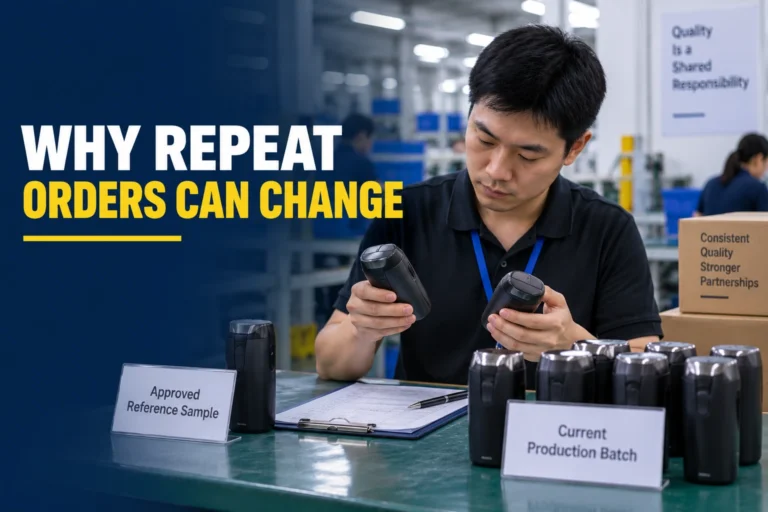
Do not approve a sample casually. Once you approve it, that sample becomes the production reference. If you approve a weak sample and the bulk order matches it, the supplier can argue they followed the approved standard.
Compare Supplier Quotes Properly
Supplier quotes can be misleading if you compare only the unit price. One supplier may quote lower because they are using weaker material, thinner cartons, cheaper accessories, looser tolerances or no real quality control.
When comparing quotes, check:
- MOQ and price breaks
- Material and component differences
- Packaging type and carton strength
- Included accessories
- Logo, mould or custom packaging costs
- Sample fees and refund terms
- Production lead time
- Payment terms
- Trade terms such as EXW or FOB
- China domestic freight cost
- Estimated carton dimensions and gross weight
For New Zealand importers, carton size and gross weight matter because freight can heavily change the real cost. A supplier who gives proper carton details early is usually easier to work with than one who avoids freight-related questions.
Before placing an order, use the Prestige Sourcing freight volume calculator to estimate CBM and volumetric weight. This helps you check whether the product still makes sense once freight is included.
Build Freight Planning Into the Sourcing Process
Freight should not be the final step after production. It should be part of the sourcing decision from the start.
Ask suppliers for:
- Carton dimensions
- Gross weight per carton
- Units per carton
- Total carton count
- Export carton quality
- Whether pallets are required or optional
- Factory pickup address
- Whether the quoted price is EXW, FOB or another term
These details help decide the most suitable China-to-NZ freight option.
When LCL Sea Freight Makes Sense
LCL sea freight from China to New Zealand can suit shipments that are too large for courier or air freight but not large enough for a full container. It is often useful for eCommerce sellers, wholesalers and smaller commercial shipments where cost matters more than speed.
When FCL Sea Freight Makes Sense
FCL sea freight from China to New Zealand can suit larger shipments where a dedicated container makes commercial sense. It can reduce handling and improve control for bulky goods, repeat orders or larger import programmes.
When Air Freight Makes Sense
Air freight from China to New Zealand can suit urgent stock, higher-value goods, product launches, samples or goods where speed matters more than the lowest freight cost.
When Express Courier Makes Sense
Express courier from China to New Zealand can work for samples, documents, spare parts and small urgent parcels. It is usually not the best option for bulky commercial stock.
When Door-to-Door Freight Makes Sense
Door-to-door freight from China to New Zealand can be useful when you want one coordinated path from supplier pickup or warehouse handover through to delivery in New Zealand.
If you are unsure which freight method fits your order, Prestige Sourcing can review supplier location, carton details, product type, shipment value and New Zealand delivery address before you commit to production.
Use Consolidation if You Buy From Multiple Suppliers
Many New Zealand eCommerce sellers and small importers buy from more than one supplier. Shipping every order separately can create unnecessary costs, repeated clearance work, messy tracking and weak control.
China-side consolidation can help by bringing goods together before export.
Consolidation can be useful for:
- Combining goods from multiple suppliers
- Checking cartons before shipment
- Reducing duplicated freight handling
- Preparing mixed SKU shipments
- Organising private label or marketplace stock
- Improving handover into LCL, FCL, air freight or courier
Prestige Sourcing offers China warehousing and consolidation support for importers who need goods received, held, checked, combined or prepared before shipping to New Zealand.
Consolidation is not only a freight decision. It is also a sourcing control tool. It gives you a chance to see what each supplier has actually sent before everything moves offshore.
Do Quality Control Before Paying the Balance
The best time to find a quality problem is before the balance is paid and before the goods leave China. Once goods arrive in New Zealand, returns to China are usually expensive, slow and commercially unrealistic.
A practical pre-shipment check can review:
- Quantity
- Visible defects
- Basic function
- Colour and finish
- Workmanship
- Packaging and carton condition
- Labels, barcodes and instructions
- Accessories and spare parts
- Whether goods appear to match the approved sample
Quality control does not guarantee perfection. It gives you a clearer basis for deciding whether to pay the balance, request rework, replace defective units, repack cartons or pause the shipment.
Prestige Sourcing can arrange practical product checks, packaging review and supplier issue follow-up through our China quality control service.
Check Packaging Before Freight Is Booked
Packaging is often treated as an afterthought, but it can decide whether goods arrive in sellable condition. Some suppliers use cartons that are fine for domestic China delivery but weak for international freight, consolidation, depot handling and New Zealand delivery.
Before shipping, confirm:
- Export carton thickness and quality
- Inner packaging and product protection
- Carton markings
- Barcode and SKU labels
- Whether cartons can be stacked safely
- Whether pallets are needed
- Whether fragile goods need extra protection
- Whether moisture, compression or rough handling may be an issue
Saving a small amount on packaging can cost more later through damaged goods, customer complaints, repacking, storage issues or unsellable stock.
Check New Zealand Compliance Early
This is a sourcing article, but compliance still needs to be considered before you approve production. Some products are easy to find in China but difficult to import or sell legally in New Zealand.
Depending on the product, check whether you need to consider:
- Children’s product safety
- Food contact material requirements
- Packaging and warning labels
- Biosecurity requirements
- Wood packaging and pallet rules
- Food, cosmetics or chemical restrictions
- Vehicle, machinery or tyre import requirements
- Trademark, copyright or design infringement risks
- Other applicable standards e.g. for electronics
MPI must be satisfied that imported goods, animals, plant products or food do not carry unwanted organisms before biosecurity clearance is given. New Zealand Customs also has requirements for commercial imports, including client code requirements for imports and exports valued at NZ$1,000 or more.
Use official sources such as New Zealand Customs and MPI, and speak with a customs broker, compliance adviser, lawyer, accountant or freight provider where required. Prestige Sourcing can help with China-side supplier documentation and practical order checks, but specialist compliance advice should come from the relevant professional or authority.
Use Landed Cost to Decide Whether the Product Is Worth Sourcing
A product is not a good sourcing opportunity just because the China price is low. The landed cost must still leave room for GST, duty, freight, storage, platform fees, advertising, returns, warranty and profit.
A basic landed cost structure includes:
- Product cost
- Sample and development costs
- Packaging, logo or tooling costs
- China domestic freight
- Inspection or quality control costs
- Warehousing or consolidation costs
- International freight
- Insurance, if used
- Customs, GST, duty, levies and broker costs
- Local delivery in New Zealand
- Expected damage, warranty or return allowance
You can use the New Zealand Customs fee calculator as a planning tool for GST, duty and import-related estimates, then confirm final figures with your customs broker or freight provider. The calculator is a guide only because actual charges depend on product classification, declared value, exchange rates, shipment method, entry details and inspection requirements.
Private Label Sourcing Needs More Control
Private label sourcing is not just buying a generic product and adding a logo. The more your brand is involved, the more control you need over samples, packaging, instructions, carton marks and repeat consistency.
For private label products, check:
- Logo placement and print quality
- Packaging artwork ownership
- Barcode and SKU setup
- Instruction manual wording
- Warning labels and product claims
- Material and colour consistency
- Whether the supplier can repeat the same standard on future orders
- Whether your product, packaging or claims could create IP or compliance issues
If you are building an eCommerce or marketplace brand, Prestige Sourcing can support China-side product preparation through our eCommerce and private label sourcing service.
Common Sourcing Mistakes NZ Importers Make
Most sourcing mistakes happen before the goods are shipped. They usually come from rushing, unclear product details or relying too heavily on supplier promises.
- Choosing the cheapest supplier without checking them
- Comparing quotes without matching specifications
- Ordering before a sample is approved
- Ignoring carton size and freight cost during sourcing
- Letting the supplier decide the shipping method without review
- Skipping quality control before balance payment
- Assuming the supplier understands New Zealand requirements
- Using weak packaging to save a small amount
- Not checking compliance until after production
- Not planning for warranty, spare parts or reorders
- Buying from multiple suppliers without consolidation planning
Why Shenzhen-Based Sourcing Support Matters
Shenzhen and the wider Pearl River Delta are close to many factories, freight providers, packaging suppliers, electronics markets, export warehouses and manufacturing clusters. For many product categories, local context matters.
A supplier may look good online but be unsuitable in practice. A quote may look cheap because the material is weaker. A factory may say it can customise a product when it is only reselling from another supplier. A carton plan may look fine until you calculate CBM. These details are easier to question when you understand how China suppliers and local freight handovers actually work.
Prestige Sourcing is New Zealand-owned and based in Shenzhen, so we understand both sides of the job: how suppliers operate in China and what New Zealand importers need when the goods finally arrive and go on sale.
If your sourcing project is already messy, delayed or spread across too many suppliers, our supply chain consulting support can help you work out the next practical step.
When Should You Use Prestige Sourcing?
You should consider getting help when the order is large enough that mistakes would hurt, when you are dealing with a new supplier, or when you need someone in China to help control the process before the goods ship. Prestige Sourcing is a New Zealand-owned sourcing agency based in Shenzhen, China.
Prestige Sourcing can help with:
- Product and supplier sourcing
- Supplier comparison and communication
- Sample coordination
- Purchasing support
- Quality control and pre-shipping checks
- Private label product preparation
- China warehousing and consolidation
- LCL, FCL, air freight, courier and door-to-door freight planning
- Connecting sourcing decisions with realistic China-to-NZ shipping options
The best time to get help is before you pay the deposit or before you pay the balance. That is when there is still room to check the supplier, confirm the product, fix packaging, inspect goods or change the freight plan.
Need Help Sourcing From China to New Zealand?
Prestige Sourcing helps New Zealand, Australian and international businesses source products from China, communicate with suppliers, check orders, consolidate goods and arrange freight from China to New Zealand.
If you are comparing suppliers, developing a private label product, buying from multiple factories or trying to work out the best freight option, send us the product details, supplier location, carton dimensions, gross weight, order value and New Zealand delivery address.
Contact Prestige Sourcing to discuss your China sourcing project.