Marine cargo insurance imports from China need more than an insurance line on a freight quote. Before your supplier releases the goods, check who is insured, where cover starts and ends, and what happens if the cargo arrives damaged.
A freight forwarder can arrange transport without automatically providing cargo insurance. Even when your quote includes an insurance charge, you still need to check the policy itself.
The important details are the insured journey, cargo value, exclusions, excess and claims process. Getting these confirmed before collection can prevent an expensive misunderstanding later.
Marine cargo insurance imports: start with the policy documents
Ask whoever arranges the insurance to identify the insurer and provide written evidence of cover. This might include an insurance certificate, policy schedule or shipment declaration.
However, a certificate alone may not explain every condition. You also need access to the applicable policy wording.
Before shipping, establish:
- Who is the insurer?
- Who is the named insured?
- Does the policy protect your financial interest in the goods?
- Can you make a claim directly, or must another party handle it?
- What shipment and transport route does the insurance cover?
- What is the insured amount and currency?
- Which exclusions and excess apply?
- Who should receive a claim notification?
If a supplier or freight provider arranged the cover, ask these questions directly. Do not assume that paying for insurance means your business automatically controls the claims process.
The Insurance Council of New Zealand explains that cargo insurance protects parties exposed to financial loss from lost, damaged or destroyed goods. It also describes how open cargo policies establish insured goods, locations, values and conditions.
Check where the insured journey begins and ends
A shipment from China to New Zealand can involve several different transport companies and warehouse handovers.
For example, your freight arrangements might include factory dispatch, domestic transport in China, a consolidation warehouse, international sea freight and final delivery in New Zealand.
These are possible shipment stages, not confirmation that your policy covers every one of them.
Ask the insurer or broker to confirm whether the insured journey includes:
- collection or dispatch from the supplier’s premises
- domestic transport from the factory to a warehouse or port in China
- receiving, consolidation and temporary storage in China
- loading and international freight
- transhipment through another port, where applicable
- unloading and depot handling in New Zealand
- domestic delivery to your warehouse, retailer or 3PL
Next, establish exactly when the policy ends. Arrival at an Auckland port does not necessarily mean the insurance continues until someone signs for the goods at your warehouse.
Pay particular attention to consolidated shipments
If several suppliers deliver goods to one China warehouse, record each supplier’s dispatch and warehouse receipt dates.
Confirm whether insurance covers the goods while they await consolidation. Also ask whether the policy imposes any storage limit or requires a particular transport arrangement.
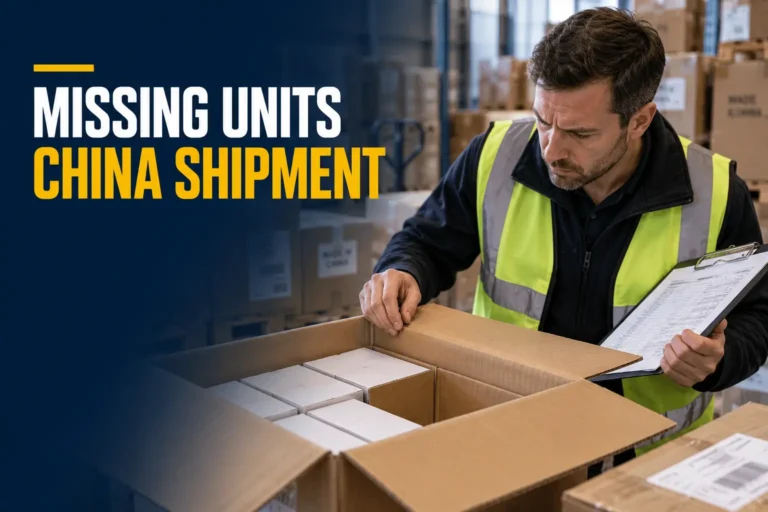
For goods entering a consolidation warehouse, keep receiving records for each supplier. These records can help establish where a shortage or visible damage first appeared.
Confirm the insured value and excess
Do not assume the insured amount matches your commercial invoice or the full cost of replacing the shipment.
Ask how the insurer values the cargo. The policy may use a defined valuation basis, so check which costs it includes.
In particular, establish whether the insured amount accounts for the agreed goods value, freight costs or other specified amounts. You should also confirm the currency and any maximum payout limits.
If you regularly import under an annual or open cargo policy, check the declaration process. The Insurance Council of New Zealand explains that open policies require merchants to declare shipments within their scope.
Next, check the excess. This is the amount you must bear when the insurer applies an excess to an accepted claim.
For smaller shipments, an excess can significantly reduce the amount you recover. Confirm whether the insurer applies it per claim, consignment or another basis.
The insurer or broker should explain these terms before you commit to the arrangement.
Read the exclusions before relying on the words “all risks”
Broad cargo cover does not mean every possible loss qualifies for payment.
Insurance policies contain exclusions, conditions and limits. These matter especially when importing fragile goods, machinery, electronics or products requiring unusual handling.
Ask the insurer to explain how the actual policy treats:
- physical damage during transport
- theft, missing cartons and unexplained shortages
- water damage and moisture exposure
- damage linked to inadequate packaging
- product defects or deterioration
- losses resulting from shipping delays
- storage and transhipment risks
- general average and salvage contributions for sea freight
Do not assume these risks are included or excluded simply because they appear on this list. The applicable wording determines the answer.
Also ask whether your product requires special conditions or approval. Give the insurer an accurate product description rather than relying on a broad category such as “electronics” or “equipment”.
If a particular risk matters to your business, ask for written confirmation of the policy treatment before shipping.
Check the packing before the factory dispatches the goods
Insurance does not replace suitable export packaging. Your supplier still needs to protect the goods against the handling and transport involved in the shipment.
Check the carton construction, internal protection and sealing method. Heavy or fragile goods may need stronger outer cartons, dividers, foam, corner protection or other suitable packing.
Before collection, ask your supplier for photographs showing:
- the finished products before packing
- the internal protective packaging
- the finished export cartons or crates
- carton marks and identifying labels
- the condition of the sealed packages
- the number of completed cartons
- any pallets or other handling units
Match the photographs against the final packing list. Where possible, identify individual cartons so you can trace them through later handovers.
Our guide to export quality cartons for shipping from China explains the packing checks worth completing before dispatch.
If the supplier’s packaging looks unsuitable, address it before authorising collection. Also confirm any packing requirements or exclusions with your insurer.
Keep Incoterms and insurance protection separate
Your agreed Incoterm affects the commercial responsibilities between buyer and seller. However, you still need to examine the actual insurance arrangement.
For example, CIF requires the seller to arrange insurance under the relevant Incoterms rules. That does not automatically mean the policy provides the broadest available protection.
The International Chamber of Commerce confirms that CIF and CIP have different default insurance requirements under Incoterms 2020.
If you are comparing supplier quotations, our FOB vs EXW vs CIF guide explains the purchasing and freight arrangements in more detail.
Regardless of the agreed term, confirm the policy’s coverage, insured amount and claims procedure. Do not rely on a supplier warranty to address physical loss or damage during transit.
Prepare your insurance evidence before cargo collection
A claim becomes harder to investigate when nobody can establish the condition or quantity of the goods before dispatch.
Build a shipment file before your supplier hands over the cargo. Keep the documents together rather than searching separate email conversations after a problem occurs.
Commercial and insurance records
- Purchase order or sales contract
- Commercial invoice
- Final packing list
- Proof of payment where relevant
- Insurance certificate or schedule
- Applicable policy wording
- Shipment declaration under an open policy, where required
Physical cargo evidence
- Photographs of finished products
- Photographs of internal packaging and sealed cartons
- Carton marks and identifying numbers
- Factory packing and dispatch records
- Warehouse receiving records, where applicable
- Inspection reports if you arranged an inspection
Transport records
Add the relevant transport documents as they become available. These may include a bill of lading, sea waybill, air waybill, consignment note or delivery receipt.
Keep any correspondence about shortages, damaged packaging or discrepancies between the factory’s packing list and the warehouse’s receiving count.
For products with individual serial numbers, record those details where practical.
The goal is straightforward: establish what the supplier dispatched, what each receiving party recorded and what eventually arrived.
What to do if goods arrive damaged in New Zealand
Damage documentation should begin when the receiving party discovers the problem, not after staff have unpacked and discarded everything.
Make sure your warehouse or 3PL knows how to handle a damaged delivery.
When damage or shortages appear:
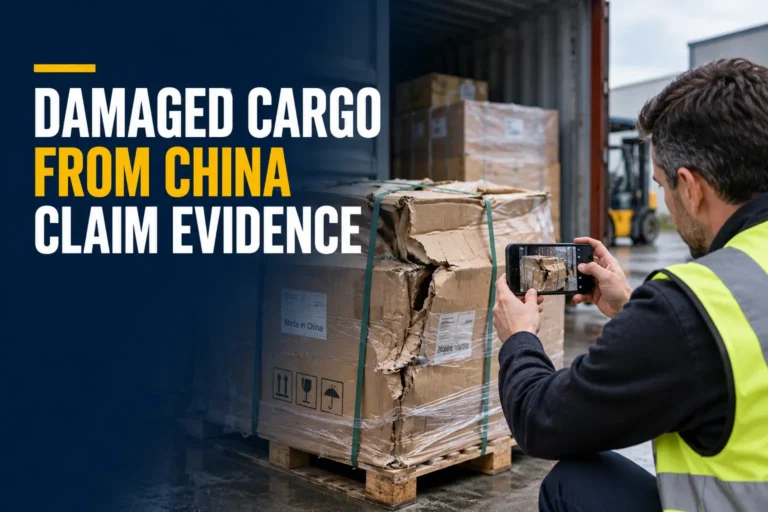
- Photograph the shipment before unpacking or rearranging it.
- Record crushed, wet, torn, opened or missing cartons.
- Photograph identifying marks and labels.
- Record visible damage or shortages on the delivery documents.
- Count the received cartons against the packing list.
- Open affected packages carefully and photograph the contents.
- Retain damaged goods and packaging while checking the insurer’s instructions.
- Notify the insurer, broker and relevant carrier promptly.
- Keep all written correspondence and claim reference numbers.
Do not sign an unqualified clean delivery receipt when you can already see damage. Record the issue according to the receiving procedure.
Check the claim notification deadline
Different policies and transport contracts can impose different notice requirements. Therefore, do not assume you can report a problem whenever convenient.
For example, NZI’s marine cargo claims guidance says policyholders must notify the carrier or third party within three days of delivery when the loss was not apparent at receipt.
That is an NZI-specific instruction, not a universal deadline for all cargo insurance.
NZI also identifies insurance certificates, transport documents, commercial invoices, photographs and delivery records as relevant claims evidence.
Follow the requirements of your own policy and transport arrangements. If the loss is substantial, ask the insurer whether a surveyor needs to inspect the goods.
Take reasonable steps to prevent further damage, but check with the insurer before disposing of affected stock or packaging.
Cargo insurance and carrier liability are different
If goods arrive damaged, do not assume the shipping company must reimburse the full purchase price.
Carrier liability depends on the applicable contract, transport leg and law. An insurance claim and a claim against the carrier may involve different conditions and procedures.
For New Zealand domestic carriage, the Contract and Commercial Law Act 2017 contains specific carriage-of-goods provisions.
However, section 243 excludes international carriage from that subpart. Therefore, those domestic carrier rules should not be treated as automatically governing the international sea or air leg from China.
Keep the contracts and documents for each transport stage. If you experience a significant loss, identify the relevant carrier, insurer and claims requirements promptly.
Cargo insurance can provide separate financial protection, but claim acceptance still depends on the actual policy.
New Zealand Customs: how insurance affects import GST
Insurance has another practical importance for New Zealand importers. Its cost can form part of the amount used to calculate import GST.
According to New Zealand Customs, import GST is calculated at 15% when applicable. The calculation includes the value of the goods, applicable duty, and relevant freight and insurance charges.
This does not mean that the insured cargo value and the Customs value are always the same.
Customs applies specific valuation rules, including rules for separating eligible international transport and insurance costs from the Customs value.
Keep freight and insurance charges identifiable
If your supplier sells goods on a CIF or similar basis, try to obtain a breakdown of the goods price, international freight and insurance costs.
New Zealand Customs specifically addresses this in its CIF import-entry guidance.
The guidance requires reasonable efforts to obtain the individual costs before using the alternative methods available when a breakdown cannot be obtained.
Keep the supplier’s invoice, freight documentation and insurance cost details together. Give accurate information to the customs broker handling your entry.
For early cost planning, you can use our New Zealand Customs Fee Calculator. It provides estimates, not a final Customs assessment.
Marine cargo insurance checklist before shipping from China
Before your supplier releases the cargo, make sure you can answer these questions:
- Have you identified the insurer and the person entitled to claim?
- Do you have the insurance certificate or other evidence of cover?
- Have you obtained the applicable policy wording?
- Does the insured journey match the actual collection, storage, freight and delivery arrangements?
- Have you confirmed the insured value, currency and excess?
- Do you understand the exclusions and any special conditions?
- Have you confirmed any declaration requirements under an open policy?
- Has the supplier completed suitable export packaging?
- Do you have photographs and accurate carton records before dispatch?
- Do you know who will receive and inspect the cargo in New Zealand?
- Do you know how and when to notify the insurer and carrier?
- Are the commercial invoice, packing list and freight details ready for your shipment file?
If any insurance terms remain unclear, ask the insurer or broker to explain them before you authorise dispatch. Keep written confirmation with the shipment documents.
Need help arranging freight from China to New Zealand?
Prestige Sourcing helps businesses coordinate China-side freight arrangements, supplier deliveries, warehouse receiving, consolidation and international shipping.
When several suppliers are involved, coordinating carton details, dispatch information and warehouse handovers can also improve the records available if a shipment arrives incomplete or damaged.
Our China to New Zealand Freight Forwarding service can help you plan the transport arrangements and establish what the freight quotation includes.
Cargo insurance is a separate consideration. Confirm its availability, terms and claims procedure with the relevant insurer or insurance broker. Do not assume insurance forms part of a Prestige Sourcing freight quotation unless the specific documents confirm it.
For a freight quote, send us the supplier location, product details, packed dimensions, gross weight, cargo value and New Zealand delivery address. Include the commercial invoice and packing list if they are available.