
FOB vs EXW vs CIF is one of the most important comparisons when buying products from China. The selected Incoterm affects collection, export clearance, freight control, insurance and risk. It also changes which costs sit outside the supplier’s quoted price.
In a FOB vs EXW vs CIF comparison, FOB is often the strongest starting point for sea freight. EXW can suit importers with reliable support inside China. CIF can also work, but only after the buyer checks the freight arrangement, insurance cover and destination charges.
FOB vs EXW vs CIF: what do Incoterms control?
Incoterms® rules published by the International Chamber of Commerce divide delivery tasks, transport costs and risk between the seller and buyer.
However, Incoterms do not decide:
- when ownership of the goods transfers
- when the deposit or balance payment is due
- whether the products meet your specifications
- how defects, delays or warranty claims are handled
- whether the supplier is legitimate
Those points still need to appear in your purchase order, contract and approved product specifications. You should also complete proper Chinese supplier verification before paying a deposit.
Always state the full Incoterm, the named place or port and the rule version. For example:
“FOB Yantian Port, Shenzhen, Incoterms® 2020”
A term such as “FOB China” is too broad. China has many ports, terminals and domestic transport routes. Therefore, the exact location affects both cost and responsibility.
How EXW works when buying from China
EXW means Ex Works. The supplier makes the goods available at its factory, warehouse or another named location.
Under the standard EXW rule, the supplier does not have to load the collecting vehicle. The supplier also does not complete export clearance. Those responsibilities sit with the buyer.
Under EXW, the buyer normally handles:
- loading at the supplier’s premises
- collection from the named address
- domestic transport within China
- export documents and export clearance
- origin warehouse and terminal charges
- international freight
- marine cargo insurance
- destination clearance and delivery
When EXW can make sense
EXW can suit businesses buying from several Chinese suppliers. The buyer can collect the orders into one warehouse and prepare a consolidated shipment.
This gives the buyer more control over pickup dates, carton counts and shipment preparation. It can also prevent each supplier from arranging a separate international shipment.
However, the importer needs a workable export arrangement inside China. A foreign buyer should not assume it can complete every Chinese export procedure itself.
The exporter, warehouse, purchasing agent or freight provider must be able to prepare the required documents. They must also arrange the export declaration through a suitable China entity.
Our guide to consolidating shipments from China explains what to confirm before several suppliers release their goods.
Prestige Sourcing can also assist with collections, supplier payments, order coordination and shipment preparation through our China purchasing support service.
Why FCA can be better than EXW
FCA is often a cleaner alternative for international orders. Under FCA, the supplier completes export clearance and delivers the goods to the nominated carrier.
If delivery occurs at the supplier’s premises, the supplier also loads the collecting vehicle. This removes two common problems found under EXW.
FCA can name the factory, consolidation warehouse, container yard or freight terminal as the delivery point. As a result, the handover is often clearer than it is under EXW.
How FOB works when buying from China
FOB means Free on Board. It applies only to sea and inland-waterway transport.
The supplier delivers the goods on board the buyer’s nominated vessel at the named port. The supplier also completes China export clearance.
Under FOB, the supplier normally handles:
- export packing
- transport to the named China port
- China export documents and clearance
- origin handling needed to place the goods on board
Under FOB, the buyer normally handles:
- ocean freight
- marine cargo insurance
- destination terminal charges
- customs clearance
- import duty, GST and government charges
- storage, demurrage or detention when incurred
- delivery from the port or depot
Risk passes to the buyer when the goods are on board the vessel. Therefore, marine cargo insurance should be in place before loading.
Why importers often choose FOB
FOB gives the importer control of the main freight booking. The buyer can select the freight provider and review destination charges before shipment.
Meanwhile, the supplier handles China export clearance and delivery to the port. This creates a practical division of responsibility for many sea freight orders.
However, the supplier’s FOB price must still be checked. An inland factory may need domestic trucking to Shanghai, Ningbo, Shenzhen or another export port.
Confirm which port is included. You should also confirm whether the price covers trucking, export clearance, terminal handling and loading charges.
Prestige Sourcing can help coordinate international freight from China through established logistics and clearance partners.
Is FOB the right term for containers?
FOB remains common on Chinese supplier quotations. However, FCA is often technically better for containerised cargo.
A shipping container is normally handed to a terminal before workers load it onto the vessel. Under FOB, risk only transfers once the container is on board.
FCA allows the parties to name the supplier’s premises, container yard or port terminal as the delivery point. This can create a clearer handover.
You do not need to reject every FOB quotation. Instead, confirm the exact port, terminal and responsibility for charges in writing.
How CIF works when buying from China
CIF means Cost, Insurance and Freight. Like FOB, it applies only to sea and inland-waterway transport.
Under CIF, the supplier pays the freight and arranges insurance to the named destination port. However, risk does not remain with the supplier until arrival.
Risk passes to the buyer when the goods are loaded on board at the origin port. The supplier pays carriage to the destination, but the buyer carries the transport risk after loading.
CIF does not mean door-to-door delivery
A CIF quotation can still exclude:
- destination terminal handling
- documentation and cargo release fees
- LCL unpacking or deconsolidation
- customs brokerage
- import duty and GST
- MPI or biosecurity charges
- storage, demurrage and detention
- delivery to your address
A cheap CIF quotation can become expensive after arrival. This often happens when the supplier’s freight provider appoints a destination agent with high local charges.
Ask for a written destination fee schedule before accepting CIF. Our guide to China to NZ freight quotes and excluded costs explains what should be checked before approving a freight offer.
Do not rely on CIF insurance without checking it
CIF requires the supplier to arrange insurance. However, this does not automatically give the buyer broad or convenient protection. The standard CIF obligation only requires a minimum level of cover unless the parties agree to stronger insurance terms.
Before accepting CIF, ask for the insurance certificate and check:
- the insurer and policy issuer
- the insured value
- the risks covered
- the policy exclusions
- the excess or deductible
- the claim notification deadline
- who is entitled to submit the claim
A CIF insurance claim can also be difficult to manage. The claim may need to pass through the Chinese supplier, the origin freight agent, the destination agent and an overseas insurer.
Each extra party can create delays, communication problems or disagreements over responsibility. The buyer may also need to provide evidence to businesses it did not appoint directly.
Arrange your own marine cargo insurance where possible
Marine cargo insurance is not included in a freight quotation unless the quotation specifically states that cover is included.
Where possible, Prestige Sourcing recommends arranging your own marine cargo insurance policy in your home country. For New Zealand and Australian importers, this usually means working with a local insurer or insurance broker.
A local policy gives the importer more control over:
- the insurer selected
- the insured value
- the risks covered
- policy exclusions
- claim requirements
- communication during a claim
Most importantly, you can deal directly with your own insurer or broker if the shipment is lost or damaged. You are not forced to rely on several overseas parties to pass information between you and the insurer.
Regular importers can ask an insurance broker about annual marine cargo cover. Businesses importing occasionally can ask about a policy for a single shipment.
The correct policy and insured value depend on the goods and shipment. Confirm the cover with a qualified insurer or insurance broker before transit begins.
Can FOB or CIF be used for air freight?
FOB and CIF are maritime terms. They are not the correct Incoterms for air freight, courier shipments or multimodal transport.
For air freight, suitable options can include:
- FCA when the supplier hands the goods to the buyer’s carrier
- CPT when the supplier pays carriage to the named destination
- CIP when the supplier pays carriage and arranges insurance
Chinese suppliers sometimes write “FOB airport” on quotations. Although this wording is common, it is not the correct use of FOB.
The purchase order should use the correct Incoterm. It should also name the airport, cargo terminal or carrier handover point.
FOB vs EXW vs CIF: which should you choose?
Choose FOB when you are shipping by sea from one supplier. It suits buyers who want the supplier to manage export clearance while they control the main freight.
Choose EXW when you have reliable support inside China. It can work for multiple pickups, consolidation or buyer-controlled collection.
Choose CIF when the freight offer is transparent. The destination charges and insurance terms must also be acceptable.
For containerised freight, compare FOB with FCA. For air freight, use FCA, CPT or CIP instead.
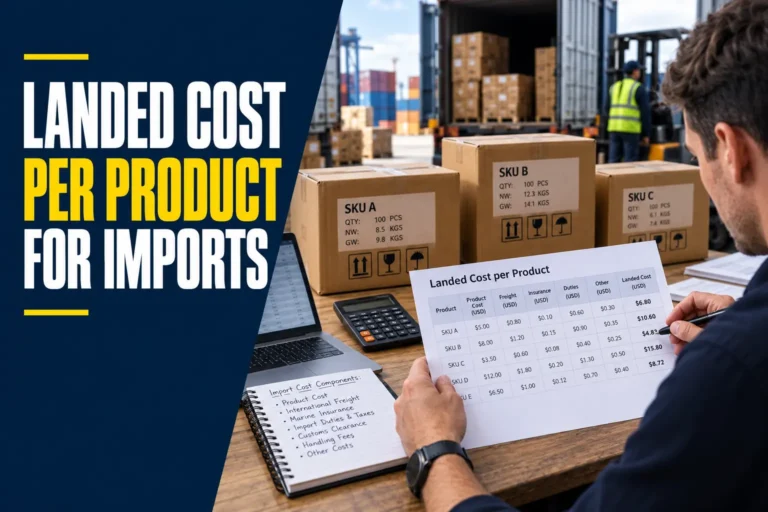
Compare FOB vs EXW vs CIF using landed cost
An EXW unit price should look lower than an FOB or CIF price because it includes fewer supplier obligations.
However, the lowest product price does not always create the lowest landed cost. Compare each quotation at the same delivery point.
Include:
- product cost
- China collection
- export clearance
- origin handling
- international freight
- marine cargo insurance
- destination charges
- customs and government costs
- final delivery
You also need the final carton quantity, carton dimensions and gross weight. Use our freight volume calculator to calculate CBM and volumetric weight.
New Zealand importers can also use the New Zealand Customs Fee Calculator for initial planning.
Final duty, GST, MPI, product classification and compliance requirements should be checked with the relevant customs broker, adviser or authority.
Review FOB vs EXW vs CIF before paying
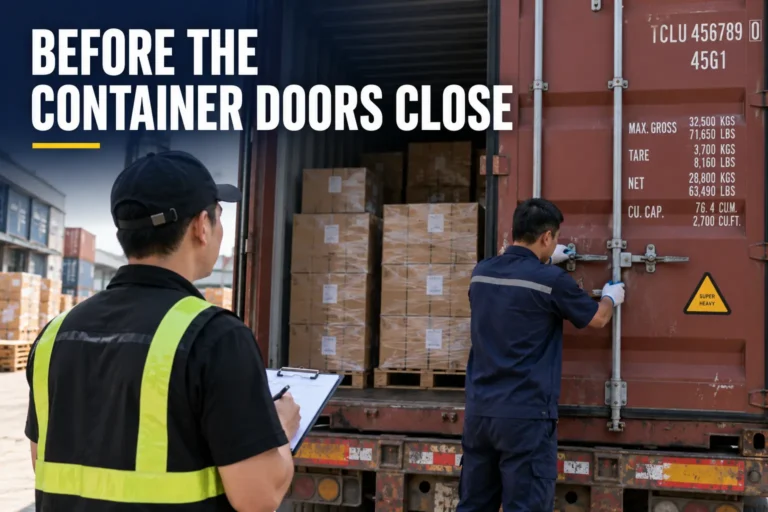
The best time to review the Incoterm is before approving the purchase order or deposit.
After production, it becomes harder to change collection arrangements, export documents, packing or freight responsibility. The supplier may also have less reason to renegotiate.
Confirm the following in writing:
- the full Incoterm and version
- the named factory, warehouse, terminal or port
- who loads the goods
- who completes export clearance
- which origin charges are included
- when risk transfers
- who books freight and insurance
- which destination costs remain payable
Incoterms also do not confirm that the goods are correct. Product specifications, packaging requirements and quality control in China must be managed separately.
For complex orders, our supply chain consulting service can help review the quotation and identify gaps before funds are committed.
Related importing guides
Need help with FOB vs EXW vs CIF?
Send us the supplier quotation, collection address, product details, carton dimensions, gross weight, shipment value and delivery address.
We can identify what the quoted term includes. We can also explain which costs, risks and responsibilities remain outside the supplier’s price.