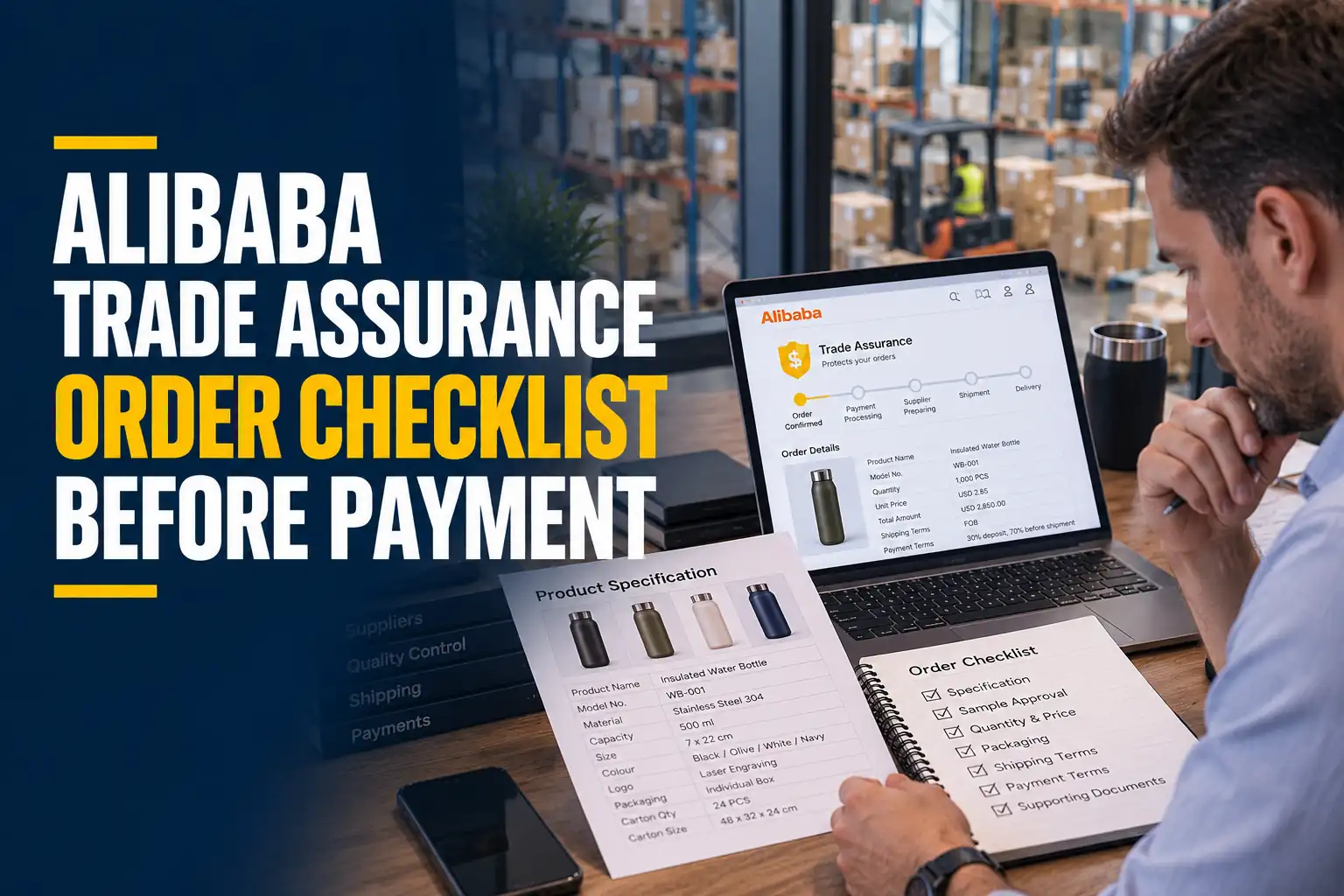
An Alibaba Trade Assurance order checklist should do one job before payment: turn supplier promises into a clear written order record. Price matters, but so do the exact product, quality requirements, shipment milestone and payment route.
Vague wording creates avoidable ambiguity. Before you pay, make sure the order and its supporting attachments describe what the supplier has actually agreed to deliver.
A sourcing brief may have helped you find and compare suppliers. However, the final order needs to reflect the production requirements you have now agreed with the chosen supplier.
Alibaba Trade Assurance order checklist before payment
Use the checklist below before paying a deposit or full balance. The aim is not to make the order longer for its own sake. Instead, each important commercial promise should be specific enough to check later.
1. Confirm the exact product and SKU
Start with the product name, model or SKU used by both sides. For custom goods, also record the current drawing, artwork or specification version. Avoid relying on a listing title if the product has changed during negotiation.
If you approved a physical sample, connect that approval to the bulk order. Record the sample date, version, photos or agreed reference. Our guide to product samples from China explains why sample approval should happen before bulk production.
2. Put measurable specifications in writing
Terms such as “good quality”, “premium” or “same as sample” leave room for different interpretations. Use measurable requirements wherever possible.
Depending on the product, these may include material, dimensions, tolerances, colour reference, finish, components, branding and functional requirements. Record the details that would cause you to reject or rework the goods if the factory got them wrong.
The same rule applies to packaging. Record the retail packaging version, units per carton, barcode or label placement, accessories and any agreed protective packing. If a detail matters commercially, write it down.
3. Record quantity, unit price and total value
Check the quantity for each SKU, not just the overall order quantity. Then reconcile unit prices, tooling charges, packaging costs and other agreed line items. The total should match the commercial deal you approved.
For multi-SKU orders, a simple attachment can prevent confusion. However, make sure the attachment clearly relates to the Trade Assurance order and uses the same product references.
4. Identify the quality acceptance point
Decide how you will check whether the goods match the order before the supplier releases them. For some products, that may involve an approved sample and final inspection. Others may need testing, measurement or specific document checks.
A supplier check, factory audit and product inspection answer different questions. If you need to separate those steps, see our guide to supplier verification vs factory audit vs product inspection.
Also record what happens if an inspection finds a problem. For example, the supplier may need to rework affected units before reinspection. You can then make the next payment or cargo-release decision using the agreed result.
5. Define the shipment milestone clearly
Do not use wording such as “ship soon” or “around next month”. Record the shipment date or milestone shown in the order. Then check that it matches the supplier’s production commitment.
Also confirm the agreed Incoterm or handover point. A factory completion date is not the same as a shipment date. Likewise, delivery to a China warehouse differs from loading international freight.
6. Check the payment schedule and route
Make sure the deposit, balance and any milestone payments match what you negotiated. If the balance depends on an inspection or another condition, record that condition in the order evidence.
Use the payment route attached to the Trade Assurance transaction. If the supplier sends different bank details or asks for a separate payment, stop and check the change before transferring money.
Do not assume that a familiar supplier makes payment details unimportant. The order value, recipient details and payment milestone should still make sense against the transaction you approved.
7. Bring important attachments into the order record
Specifications often sit across PDFs, spreadsheets, artwork files and message threads. Before paying, organise the final versions and make sure the supplier has acknowledged them.
- Final product specification or drawing
- Approved artwork and packaging files
- Sample approval reference
- SKU and quantity breakdown
- Inspection criteria or checklist
- Agreed shipping instructions or milestone
Use clear filenames and version dates. In practice, an obviously approved final version is much easier to manage than several files with similar names.
8. Put changes and approvals back into the written record
Negotiations often move between email, WeChat, WhatsApp and calls. That may be convenient, but important changes should also appear in the order record or relevant platform messages.
If the supplier changes a material, colour, packaging method or production date, confirm the revised term in writing. Do the same when you approve a new sample or drawing.
This step matters because orders evolve. You want one clear trail showing which version replaced the earlier agreement.
9. Save a pre-payment evidence pack
Before sending money, save the order details and key attachments in your own records. Keep the approved specifications, supplier messages, payment schedule and relevant screenshots together.
This helps even when no dispute occurs. Your team can use the same information during production follow-up, inspection and final shipment checks.
10. Check the protection and deadlines for this specific order
Do not assume every Trade Assurance transaction uses the same refund, dispute or claim deadline. Read the terms and dates attached to the specific order before paying.
Record any relevant shipment milestone, delivery date and deadline shown in the transaction. Once production starts, monitor those dates rather than relying on a generic refund window from an old guide or forum post.
Order-specific terms can also change when the transaction changes. Therefore, review them again if you amend the quantity, payment structure, shipment arrangement or another significant term.
What not to leave as a supplier promise
The strongest order record turns subjective promises into checkable facts. For example, replace “same quality as sample” with the approved sample reference and the important measurable specifications.
Likewise, replace “good export packing” with the actual packing requirements you agreed. Instead of “ship as soon as possible”, record the relevant shipment milestone and date.
Clear terms make supplier follow-up easier even if you never need to challenge the order. They also give production staff and inspectors a more useful reference.
Trade Assurance does not replace order management
A Trade Assurance order can bring the commercial terms, payment and supporting evidence together. However, it cannot make an unclear product specification precise for you.
You still need to approve samples carefully, control specification changes and decide what evidence you require before final payment. An inspection also needs something objective to inspect against.
That distinction is important. A well-documented order gives the supplier a clearer target and gives your inspector something concrete to check. It also makes any later disagreement easier to explain against the written agreement.
Need help managing an Alibaba order in China?
If you already have a supplier, Prestige Sourcing can help coordinate purchasing, supplier communication and production follow-up in China. Our China Purchasing Support service helps businesses manage the buying process without starting supplier sourcing again.
Request a Quote with the product, supplier and order details you already have.